Read it through your world
The whole page is read through this lens.
✦ Ubhubhubhu · in one breath ✦
Brewed with her Ubulawu sisters, she makes a potent dream elixir: the Gates open after a few nights.
⊹ The path of the plant
⊹ Community voices
What the community murmurs.
Average · 6 reviews
Breakdown
I’ve always loved shopping and the herbs are superb quality. My favorite shop on Etsy in fact and whenever I ask for herbal samples for future purchases I’ve never been disappointed. I always receive more than one. As long as this shop is available on Etsy it will be my go to for my medicinal herbs.
Tamara
Dream · 2 July 2023
Simple d utilisation, effets rapides. Pour moi m'alimenter avant et pendant avec des aliments sains et naturels, sans origine animale m'a beaucoup aidé à avoir des résultats immédiats.
Florence Doire
Dream · verified purchase · 27 August 2024
Ask the Forest about Ubhubhubhu
408 books digested, 97,512 indexed passages. She answers on lineages, synergies, cautions, ritual variations.
⊹ FREQUENT QUESTIONS ⊹
We answer.
What is ubhubhubhu?
Ubhubhubhu (Helinus integrifolius) is a South African liana of the Rhamnaceae family, one of the ubulawu dream plants. In English it is called soap plant, for the foam it gives (Sobiecki 2002).
Ubhubhubhu wenzani: what is ubhubhubhu used for?
At the initiation of Pedi and Zulu diviners, it is drunk as an infusion "to strengthen the memory and give keen observation" (Mönnig 1967; Bryant 1966). Blended with Dianthus species, it is used to communicate with the ancestors (Sobiecki 2008). With us, it is taken alone or with the other ubulawu plants, for dreaming.
How do I prepare ubhubhubhu?
Two traditional ways. As a decoction — about a tablespoon of crushed root simmered 20 to 30 minutes in 250 ml of water, in the evening. As foam — the material beaten vigorously in cold water until forming a thick white foam, ingested before bedtime, ideally while singing.
What is the ubulawu family?
Ubulawu are roots (sometimes stems or bark) that diviners of southern Africa beat in cold water into a white foam, drunk while fasting to strengthen the dream. For Xhosa diviners, ubulawu "casts a white light" on the dream (Hirst 2005).
Why is ubhubhubhu the entry plant?
It is the way we present it, shaped by practice: it is the gentlest of the family. The sources describe it as a plant of memory and observation, drunk at the initiation of diviners.
Does ubhubhubhu have contraindications?
Avoid it during pregnancy, breastfeeding and in children. Sedatives, antidepressants, allergy to the Rhamnaceae: ask your doctor first. In large amounts, saponins can cause nausea: keep to the small amounts of the tradition.
What's the difference with Silene capensis (undlela ziimlophe)?
Ubhubhubhu is the gentle entry plant; Silene capensis is the white path, deeper and visionary. Tradition often associates them — ubhubhubhu prepares the ground, Silene opens the way.
Where does INFUSE's ubhubhubhu come from?
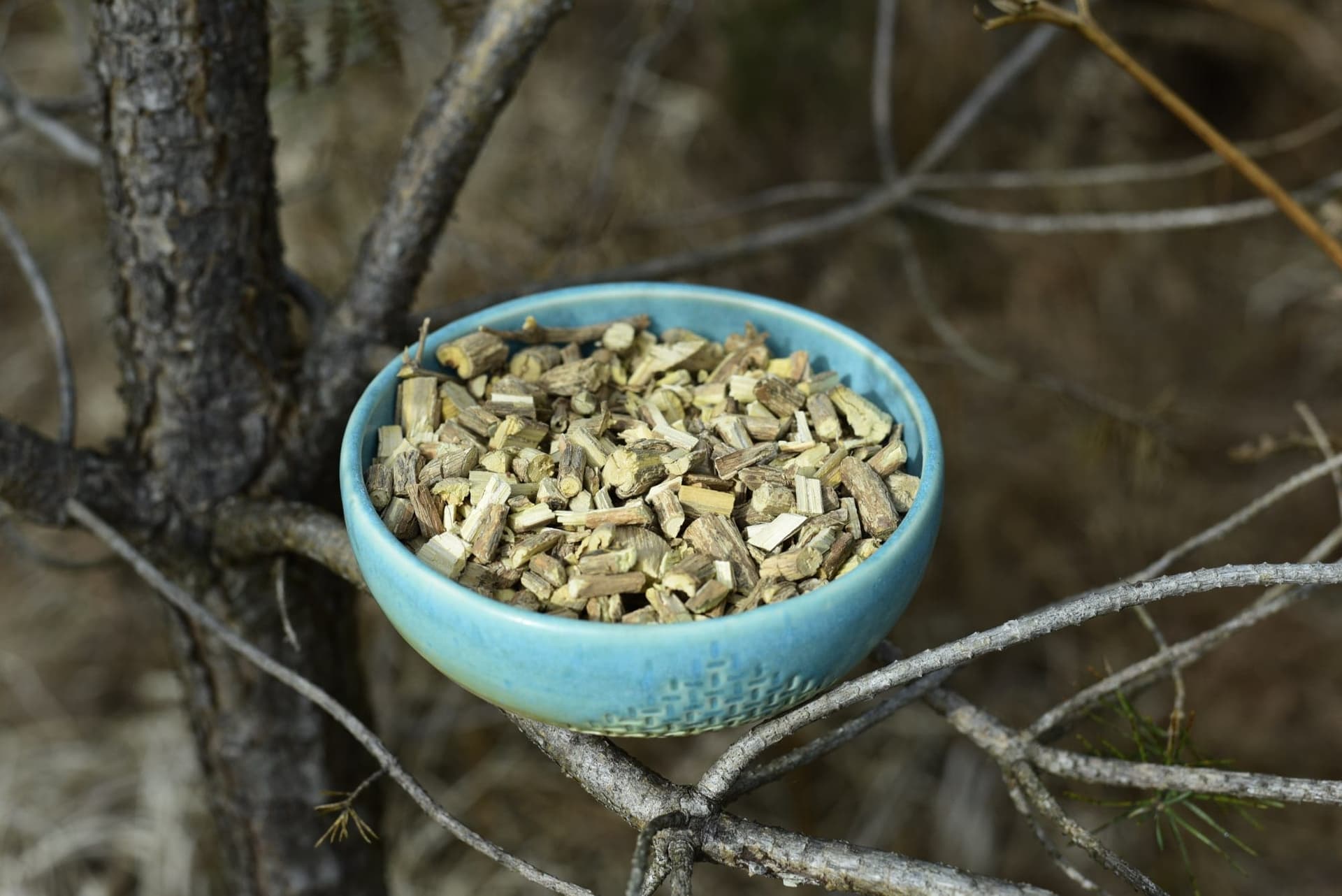
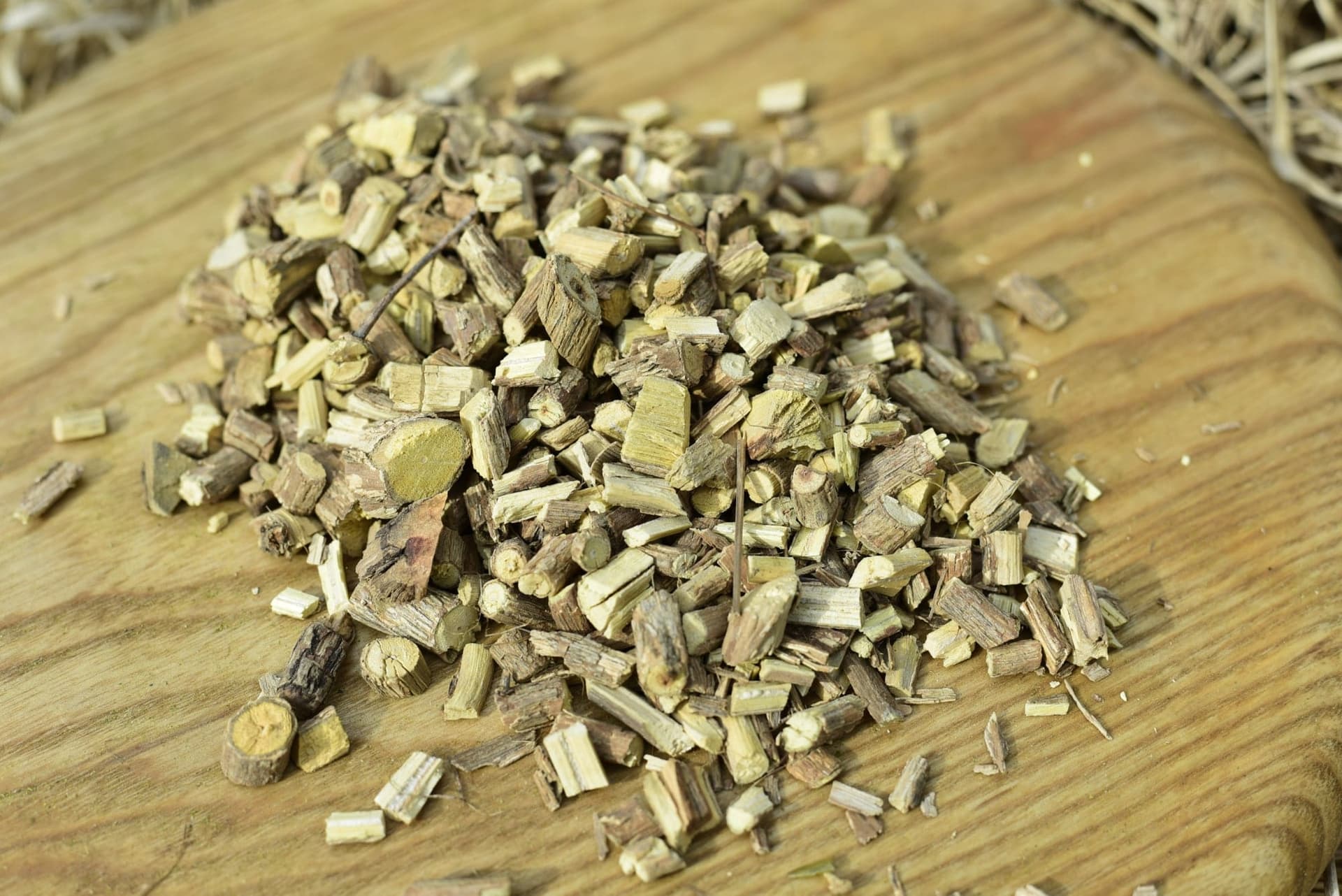
She is wild-harvested in South Africa. INFUSE offers her as crushed root, in jars of 10g, 20g and 50g.
What is the scientific name of ubhubhubhu?
Helinus integrifolius, of the Rhamnaceae family. Its other names: phelotheri in Sesotho, soap plant in English.
⊹ Chapter · Questions ⊹
Ask, answer, share.
One question, one answer — sometimes several voices. The community answers first; INFUSE steps in when it should.
Nobody has opened a thread yet about this plant. You can be the one — a real question, a use, a doubt, a detail.
Anonymous if you prefer.
In depthbotany · phytochemistry · history
For those who want to go below the page: botany, chemistry, then four voices, each one named. ◆ what the tradition left in writing, ◇ what research has measured, ● what our dreamers tell us, ☾ what the House says.
Botany
Ubhubhubhu is the isiZulu name of Helinus integrifolius, a climbing plant of the Rhamnaceae, the family of the jujube and the European buckthorn. A slender, flexible vine native to South Africa, she grows in the Eastern Cape, KwaZulu-Natal and Limpopo. Her Xhosa name is ityolo, her Sesotho name phelotheri; the Afrikaans seepbos, "soap bush", comes from the rich foam her stems and roots release when beaten in cold water — rural communities long used her as a soap. A humble household soap and a plant of the dream: a double life shared by several of the ubulawu.
Phytochemistry (descriptive)
The foam comes from abundant triterpene saponins, surface-active molecules that trap air and hold the froth. A 2024 study of the plant for skin care (Harnessing the Potential of Helinus integrifolius in Cosmeceutical Research, MDPI) describes saponins specific to the species, the helinusides. The plant also holds flavonoids and tannins. The rest of her chemistry is still largely uncharted.
◆ The documented tradition
At the initiation of a diviner, an infusion of ubhubhubhu is drunk "to strengthen the memory and give keen observation", among the Pedi (Mönnig 1967) as among the Zulu (Bryant 1966). Blended with Dianthus species, it helps to communicate with the ancestors, and its ubulawu is made from the leaves and stems (Sobiecki 2008, pp. 336 and 344). Its English name, soap plant, speaks of the foam it gives (Sobiecki 2002).
◇ The studies
How she acts on dreaming has not been worked out, and research on this side of her is almost non-existent; what is known remains traditional and oral. The field where research has advanced is the skin: the 2024 study reports, in vitro, antioxidant, anti-tyrosinase, antimicrobial and antifungal activities, which sheds light on the popular cosmetic use of the plant in the Vhembe region (Setshego 2020). These are laboratory leads.
● Our dreamers
Its 6 reviews published on INFUSE speak of the quality of the roots; none tells of a night yet (read in September 2026).
☾ The House
Master Dream Medicine; Core Teacher of the Ubulawu Family. Brewed with the other magical plants of the Ubulawu Family, a potent dream elixir is obtained. This simple cure is usually enough for months of Dream Activation. It is not necessary to consume these herbs frequently to achieve potent long-term effects.
Lineage and history
Ubhubhubhu belongs to the ubulawu, the South African plants that share one grammar: plant matter beaten in cold water until a white foam rises, taken to purify and to strengthen the dream. The ethnobotanist Jean-François Sobiecki gathers what the written record holds about her (Sobiecki 2008):
- at the initiation of a diviner, an infusion is drunk "to strengthen the memory and give keen observation" (Mönnig 1967 among the Pedi; Bryant 1966 among the Zulu);
- blended with Dianthus species, she is used to communicate with the ancestors;
- diviners in Johannesburg prepare a blend held to be strong: Helinus integrifolius, Hippobromus pauciflorus and Dianthus mooiensis;
- Zulu medicine also uses her against "hysteria".
Sobiecki notes that her ubulawu is made from the leaves and stems. The ubhubhubhu we offer is crushed root; we say so, so that you know what you hold.
In our practice she is the plant of entry, the gentlest of the family: where other ubulawu open deep channels, she clears the reading of the dream, and lets the nervous system grow used to the family gently.
Safety notes
Avoid during pregnancy, breastfeeding and in children, as data are lacking. Saponins in large amounts can cause nausea, so keep to the traditional landmarks. Take care if you take sedatives or antidepressants, and when combining her with other ubulawu (Silene capensis is predicted to contain β-carbolines). Avoid if you are allergic to Rhamnaceae and with any acute psychiatric condition. Do your own research: a gentle plant, and a ceremonial one.
Sources: Sobiecki J.F. 2008, Southern African Humanities 20:333-351 · Mönnig H.O. 1967, The Pedi · Bryant A.T. 1966, Zulu Medicine and Medicine-Men · Setshego M.V. et al. 2020 · MDPI 2024, Harnessing the Potential of Helinus integrifolius in Cosmeceutical Research.
Sources for the four voices: Sobiecki J.F. 2002, Transactions of the Royal Society of South Africa 57:1-24 · Sobiecki J.F. 2008, "A review of plants used in divination in southern Africa", Southern African Humanities 20:333-351 · Mönnig H.O. 1967, The Pedi · Bryant A.T. 1966, Zulu Medicine and Medicine-Men.