Read it through your world
The whole page is read through this lens.
✦ Uqume · in one breath ✦
The filter that makes the voice clear — the tree that resprouts, the ancestor who answers clearly.
⊹ The path of the plant
⊹ Community voices
What the community murmurs.
Average · 1 reviews
Breakdown
Hello all, so I chew this herb and swallow the Muthi directly. I later soak in in water the masticated bark I don't swallow. I clean it, then dehydrate the bark and store in some water then froth it for one last extraction of the foam. It works wonderfully! I feel energized and calm at the same time with Uqume. I do not dream much or shall I say remember them. When I need to know my Ancestors find a way to tell me in waking dreams which are Intense from all the different dream herbs I take. Cool fact, North American Indigenous Apache kids chew Uqume or Shining Sumac!
Arryelle Banahene
Dream · verified purchase · 29 January 2025
Ask the Forest about Uqume
408 books digested, 97,512 indexed passages. She answers on lineages, synergies, cautions, ritual variations.
⊹ FREQUENT QUESTIONS ⊹
We answer.
What is uqume?
Uqume is the bark and root of Hippobromus pauciflorus, a small tree of southern Africa in the Sapindaceae family (a cousin of lychee, longan and soapberry). Zulu and Xhosa diviners use it for trance and, as ubulawu, for dreams of the ancestors (Sobiecki 2008).
What is uqume used for?
The sources record three uses among diviners: entering trance (Hutchings 1996), rinsing the nose with its foam before trance (Watt & Breyer-Brandwijk), and dreaming of the ancestors, its bark going into a Xhosa initiation ubulawu with Silene (Broster 1981). With us, it is mostly taken in a blend with the other ubulawu plants.
What does the name uqume mean?
The Zulu name is also spelled uqhume (Sobiecki's spelling). Its literal meaning is not given in the sources we have read, and we would rather not invent one.
Why is uqume called false horsewood?
False horsewood (English) and basterperdepis (Afrikaans) come from a historical confusion with Clausena anisata, the true horsewood. Settlers named African plants by reference to plants known to them, without grasping the specificity of each species. The Zulu and Xhosa names, however, preserve precise knowledge.
How do I prepare uqume?
Two ways. Soft decoction — 1 to 2 g of crushed root in water, simmer 20-30 minutes, drink in the morning on an empty stomach or before bedtime, as a 3 to 7 day cure. Traditional way — crushed root in cold water, beaten until white foam, drunk foam included. Often in ubulawu mix, more rarely alone.
Does uqume contain cardiac glycosides?
Maroyi's review (2025) reports cardiac glycosides among the compounds of Hippobromus pauciflorus. The traditional preparation (1 to 2 g, whisked foam or gentle decoction) stays modest; concentrated extracts and high doses are best avoided.
What's the difference between uqume, undlela ziimlophe and ubhubhubhu?
Three plants of the same ubulawu family. Undlela Ziimlophe (Silene undulata) is the dream plant of Xhosa diviners, drunk as foam while fasting (Hirst 2005). Ubhubhubhu (Helinus integrifolius) is drunk at initiation "to strengthen the memory and give keen observation". Uqume accompanies trance and goes into initiation blends with Silene (Sobiecki 2008).
What precautions with uqume?
Avoid it during pregnancy, breastfeeding and in children. Heart medication (digitalis, antiarrhythmics, beta-blockers), antidepressants, sedatives, opioids, acute psychiatric conditions: ask your doctor first. In rats, a high dose of leaf extract was toxic to the liver and kidneys (Pendota et al.). Leave driving for another time after ritual use.
How do you drink uqume as a foam?
A small amount of crushed bark in a large glass of cold water, whisked with a fork or a stick until white foam rises. Drink the foam in the morning, fasting, for 3 to 5 days, alone or with the other ubulawu plants, with an intention set the night before and a notebook by the bed.
What do people who tried uqume say?
Only one review so far. Arryelle chews the bark, then whisks it into foam: 'I feel energized and calm at the same time with Uqume. I do not dream much or shall I say remember them.' She adds that her ancestors speak to her in waking dreams.
⊹ Chapter · Questions ⊹
Ask, answer, share.
One question, one answer — sometimes several voices. The community answers first; INFUSE steps in when it should.
Nobody has opened a thread yet about this plant. You can be the one — a real question, a use, a doubt, a detail.
Anonymous if you prefer.
In depthbotany · phytochemistry · history
For those who want to go below the page: botany, chemistry, then four voices, each one named. ◆ what the tradition left in writing, ◇ what research has measured, ● what our dreamers tell us, ☾ what the House says.
Botany: the small tree of the forest edge
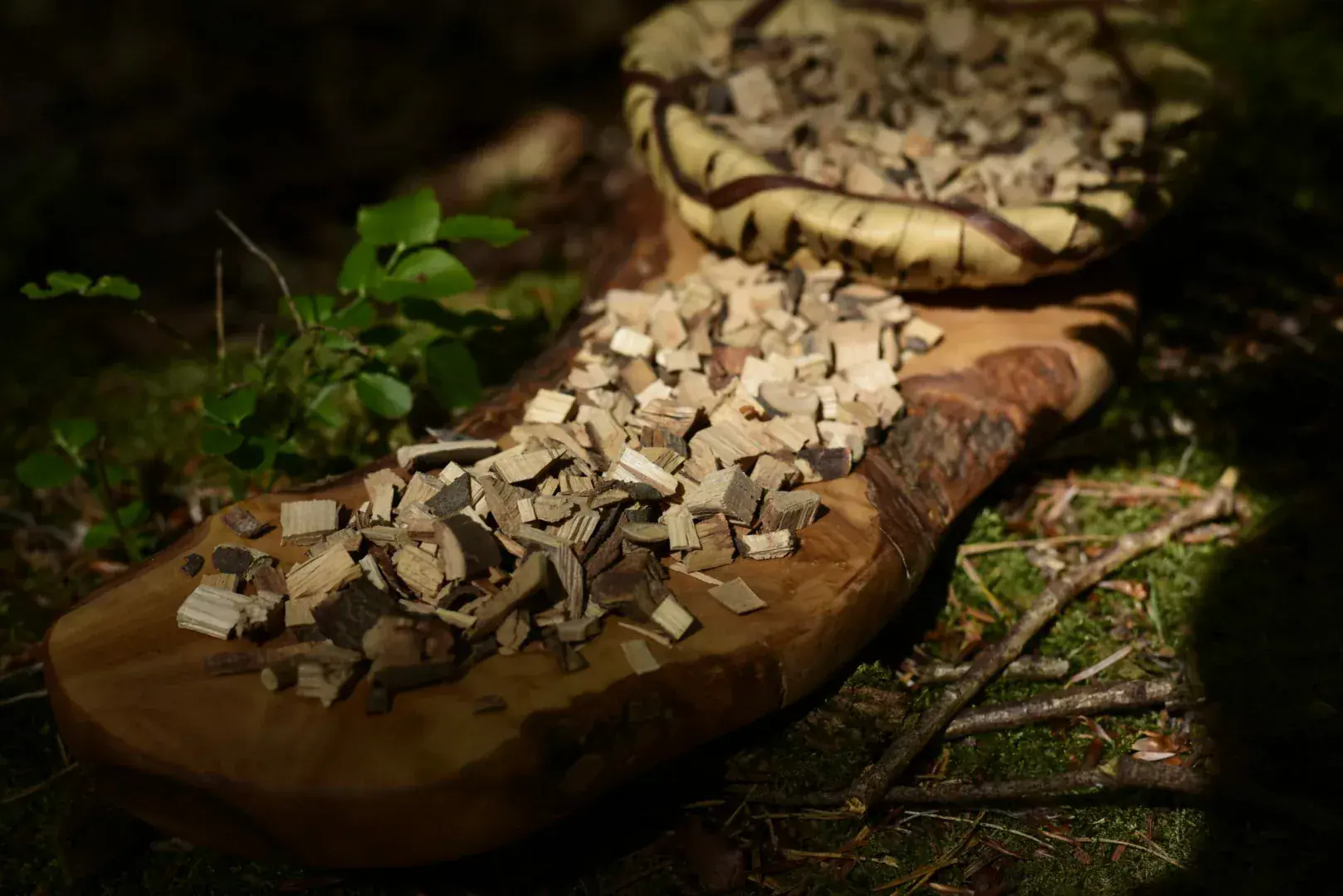
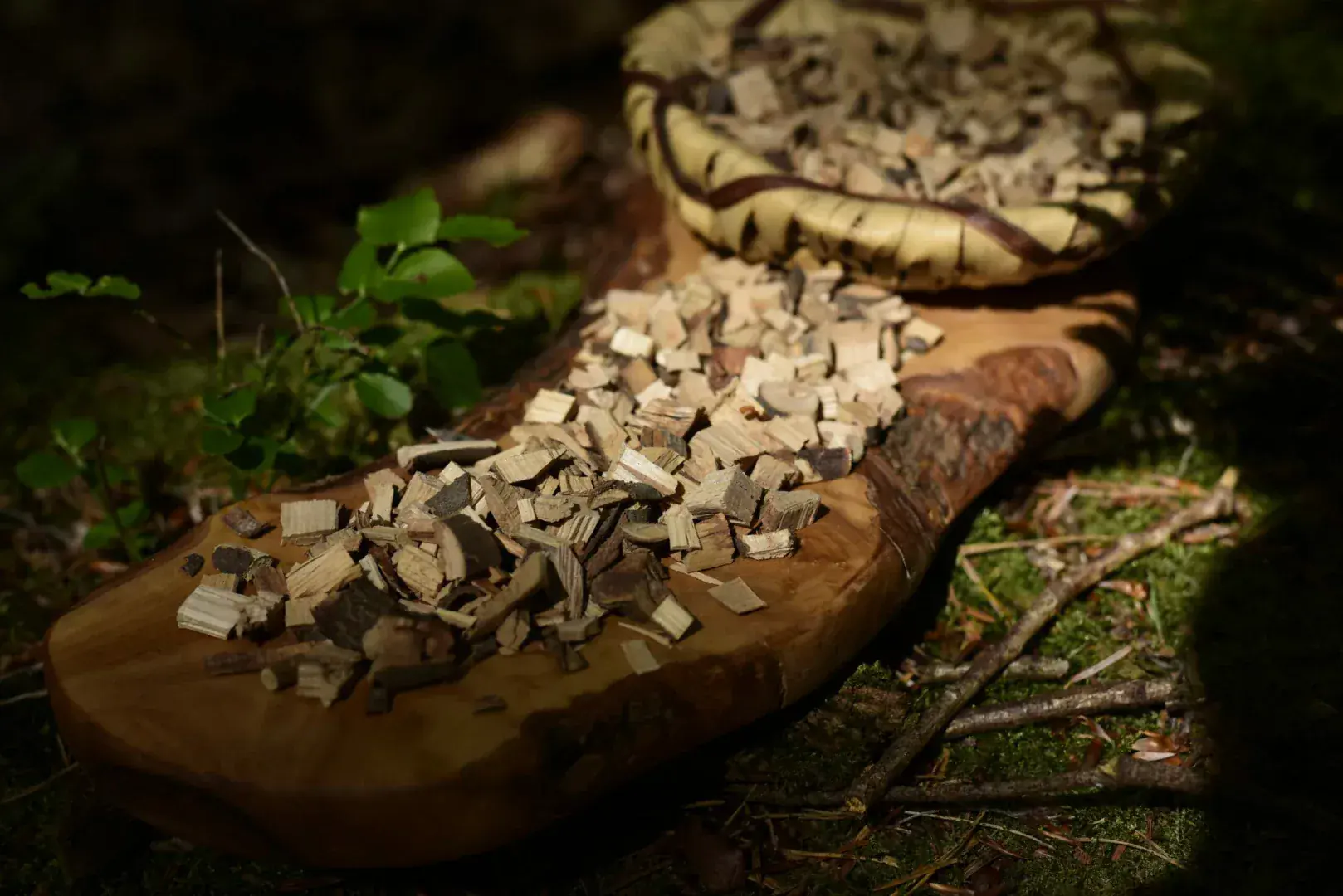
Hippobromus pauciflorus (formerly Rhus pauciflora) is a small, semi-deciduous tree or shrub of the Sapindaceae. It grows at forest edges, along streams and in the thickets of southern Africa: Eastern Cape, KwaZulu-Natal, Mpumalanga, Limpopo, Gauteng. Glossy compound leaves, small white flowers in panicles, single-seeded fruits eaten by birds. The wood is hard, dense and durable. After a bush fire or cutting, the stump sprouts again vigorously. In English it is called false horsewood, in Afrikaans basterperdepis, names borrowed from another plant, Clausena anisata; the isiZulu name keeps its own knowledge.
The soap family
Uqume belongs to the same family as the Indian soap nut Sapindus mukorossi, used for centuries as a natural soap, and as the lychee and the longan. The Sapindaceae often bear species rich in saponins, which is why so many of them foam. The white foam raised when the bark is beaten in cold water is a family trait.
Phytochemistry (descriptive)
A 2025 review by the ethnobotanist Alfred Maroyi gathers the chemistry reported for the species: triterpene saponins (the source of the foam), tannins, flavonoids, proanthocyanidins, diterpenes, phenolic compounds, steroids and terpenes, and cardiac glycosides. This last group calls for discipline in the dose: the traditional foam dilutes these compounds a great deal, while concentrated extracts or large doses can be toxic.
◆ The documented tradition
Zulu diviners use its roots to enter trance (Hutchings 1996), and one gesture is recorded precisely: the diviner rinses the nose with the foam before falling into trance (Watt & Breyer-Brandwijk). Among the Xhosa, its powdered bark goes into an initiation ubulawu with Rubia petiolaris and Silene undulata, for dreams of the ancestors (Broster 1981). Diviners in Johannesburg combine it with Helinus integrifolius and Dianthus mooiensis in a blend held to be strong (all cited by Sobiecki 2008, p. 344).
◇ The studies
Pharmacological work on Hippobromus pauciflorus is scarce and preliminary. Maroyi's review lists laboratory activities — analgesic, anthelmintic, antibacterial, antifungal, anti-inflammatory, antioxidant, antiplasmodial, antipyretic — mostly in vitro or in animals, and none of them established in people. One study deserves attention for safety: in rats, an aqueous leaf extract at 50 and 200 mg/kg showed toxic effects on the blood, liver and kidneys (Pendota et al. 2009, African Journal of Traditional, Complementary and Alternative Medicines).
How uqume acts on dreaming has not been worked out.
● Our dreamers
Uqume has only one review published on INFUSE so far (read in September 2026). Its dreamer chews it, then whisks the bark into foam:
"I feel energized and calm at the same time with Uqume. I do not dream much or shall I say remember them. When I need to know my Ancestors find a way to tell me in waking dreams." — Arryelle
☾ The House
Master Dream Medicine. Uqume is a mysterious wood used by the Zulu & Xhosa of South Africa. This plant is particularly unknown to the modern world. Brewed with the other magical plants of the Ubulawu Family, a potent dream elixir is obtained. After taking these medicines for 3 to 5 days with prayers and respect, the Dream Gates open up.
Lineage: what is written, what stays oral
The ethnobotanist Jean-François Sobiecki, in his inventory of the divination plants of southern Africa (2008), gathers what the written record holds:
- the roots are used against headaches, in love charms, and by diviners to enter trance (Hutchings 1996);
- "the diviner rinses the nose with the foam before falling into trance" (Watt & Breyer-Brandwijk) — the foam breathed in;
- the plant is used for phalaza, ritual vomiting, and for dreams of the ancestors (personal communication from N. Podile);
- at the initiation of Xhosa diviners, the powdered bark goes into an ubulawu with Rubia petiolaris and Silene undulata, for dreams of the ancestors (Broster 1981);
- in Johannesburg, diviners prepare a blend held to be strong: Hippobromus pauciflorus, Dianthus mooiensis and Helinus integrifolius.
Among the Xhosa, the foam of the ubulawu is drunk until one vomits a little, ukugabha (Lamla 1975, via Sobiecki), a purification that Hirst (2005) also describes. Most of what is known of uqume, though, remains oral, carried by elders in the diviners' lineages. Its absence from books long protected it from over-harvesting; today it makes its transmission fragile.
Safety: the dose, interactions, conservation
Cardiac glycosides and animal toxicity. Keep strictly to the traditional dose, 1 to 2 g at most per preparation, and avoid concentrated extracts. If you take heart medication — digitalis, antiarrhythmics, beta-blockers — ask your doctor first.
Pregnancy, breastfeeding, children. Avoid.
Interactions. Take care with antidepressants, sedatives, opioids and other psychoactive medication. Avoid with any acute psychiatric condition.
Allergy to Sapindaceae. If you react to lychee, longan or horse chestnut, take care.
Mild emetic. Vomiting belongs to the ritual tradition. You can drink the foam without going that far.
Conservation. Uqume is little traded internationally, and harvesting pressure should stay modest. We buy it wild-harvested with respect in South Africa.
Sources: Sobiecki J.F. 2008, Southern African Humanities 20:333-351 · Hutchings A. et al. 1996, Zulu Medicinal Plants · Watt J.M. & Breyer-Brandwijk M.G., Medicinal and Poisonous Plants of Southern and Eastern Africa · Pendota S.C. et al. 2009 · Maroyi A. 2025 (review of Hippobromus pauciflorus) · Hirst M. 2005.
Sources for the four voices: Sobiecki J.F. 2008, "A review of plants used in divination in southern Africa", Southern African Humanities 20:333-351 (p. 344) · Hutchings A. 1996, Zulu Medicinal Plants · Pendota S.C. et al., African Journal of Traditional, Complementary and Alternative Medicines · our customers' reviews.