Read it through your world
The whole page is read through this lens.
✦ Mukanya Kude · in one breath ✦
A powerful dream elixir; the Gates of the Dream open.
⊹ The path of the plant
⊹ Community voices
What the community murmurs.
Average · 24 reviews
Breakdown
This was so worth it!!! My dreams were so vivid felt so real! So many messages. Thank you so much for sharing this ! Will buy again soon! And your website was healthful with all the information regarding the tea. And thank you for the other complimentary herb. Will use it soon when I make my herbal cigarettes. ⭐️⭐️⭐️⭐️⭐️⭐️
Tara
Dream · 16 February 2023
love this stuff great for dream work! I couldn't be more impressed. I use in a tea and altho it's not great tasting, it does give great dreams
Reviewed by Inactive
Dream · 21 April 2022
Lovely aroma and taste, loved the packaging as well. Is effective in aiding lucid dreaming.
Charity
Dream · 7 January 2021
Ask the Forest about Mukanya Kude
408 books digested, 97,512 indexed passages. She answers on lineages, synergies, cautions, ritual variations.
⊹ FREQUENT QUESTIONS ⊹
We answer.
What is Mukanya Kude?
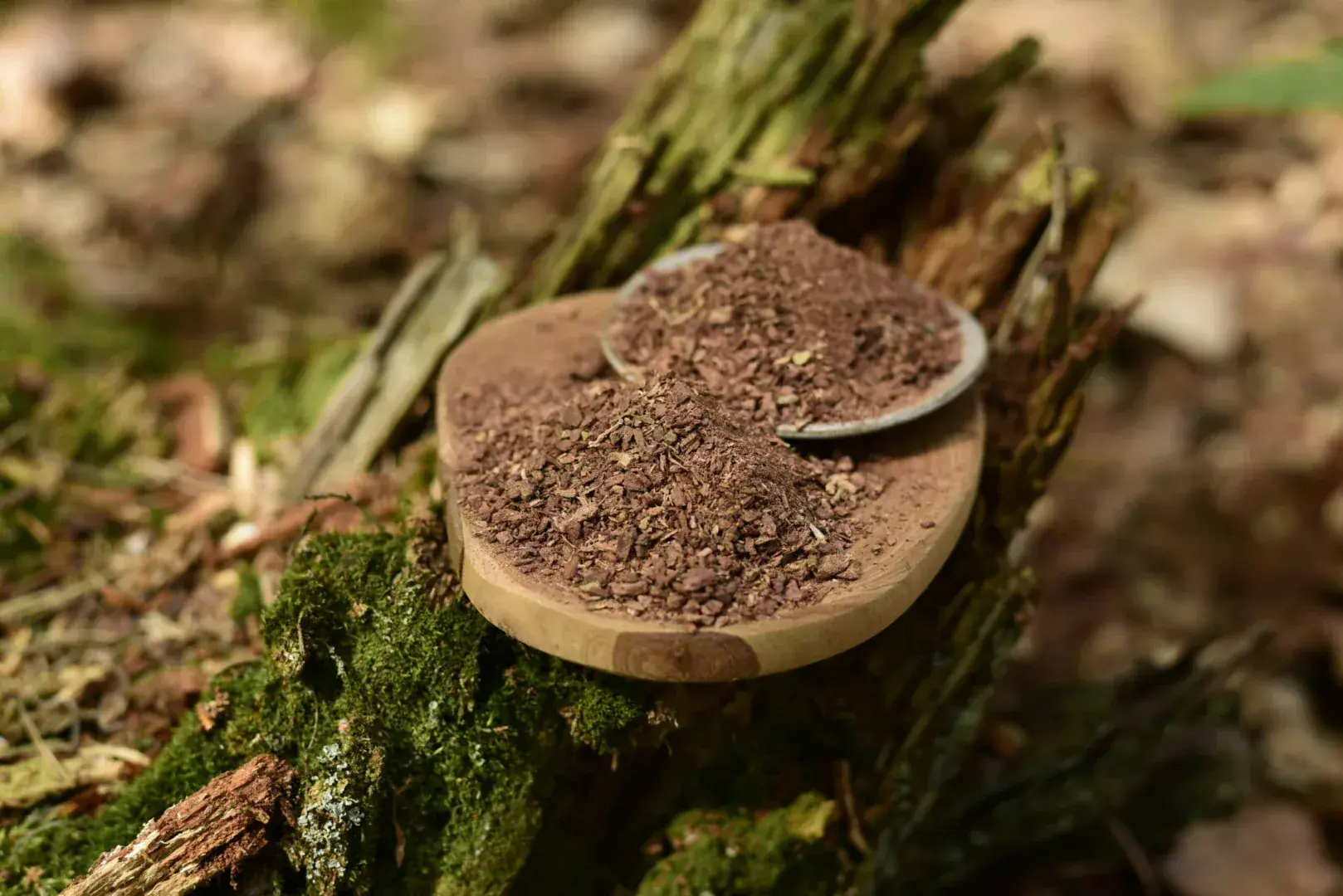
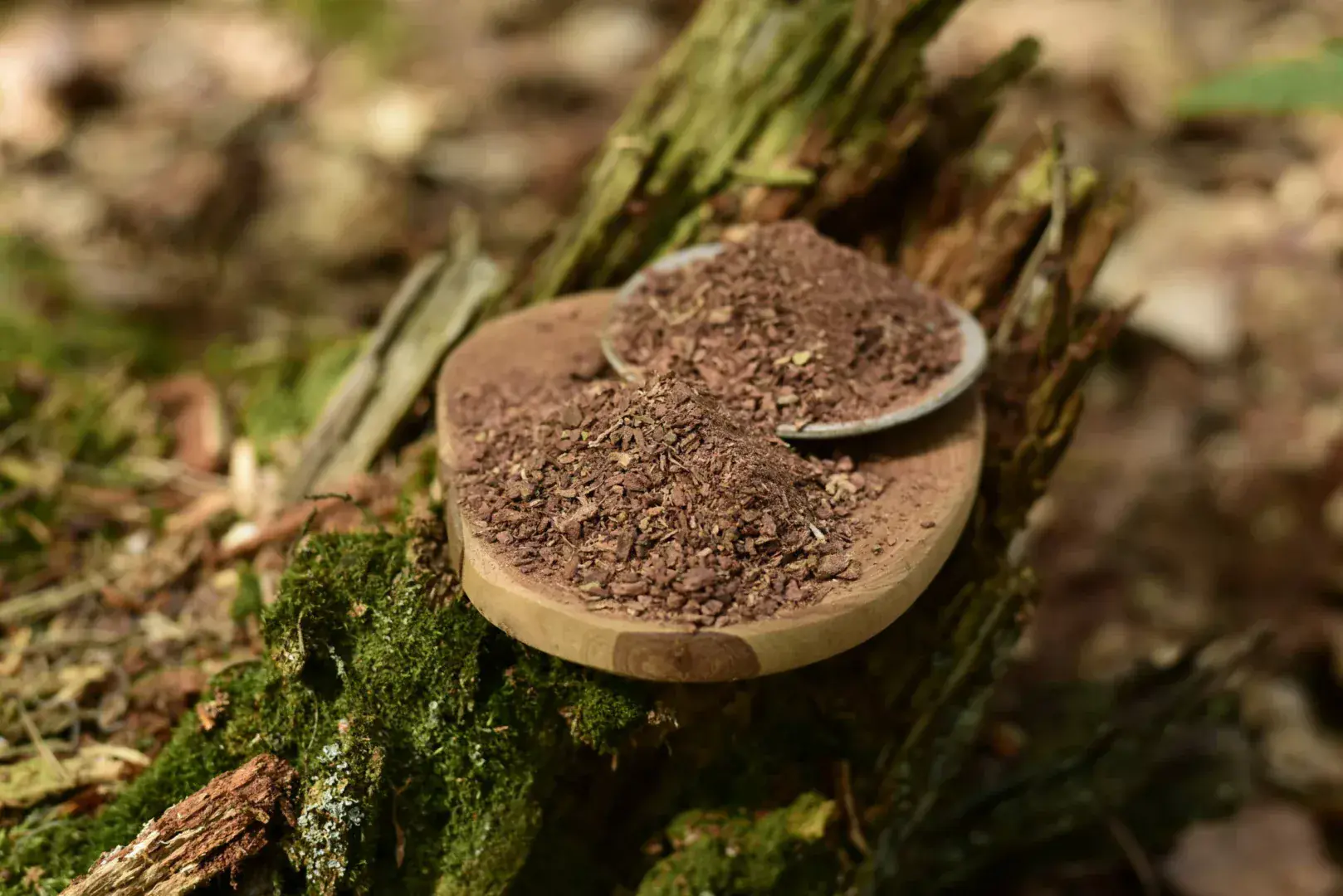
Mukanya Kude is the bark of Vachellia xanthophloea (formerly Acacia xanthophloea), an acacia of southern and eastern Africa nicknamed fever tree for her luminous yellow-green bark. She is one of the dream plants of the Ubulawu family, which we hold as a plant of protection and anchoring during dream work.
What is Mukanya Kude used for?
The bark enters ubulawu preparations — the frothy dream infusion. We give Mukanya Kude the role of protection and anchoring: the tree visible from afar guards the dreamer during the oneiric journey. She is a ceremonial plant, taken with a strong intention.
What is ubulawu?
Ubulawu is a family of dream plants of southern Africa, prepared by Zulu and Xhosa sangoma, most often beaten in cold water until forming a white foam that is ingested. Undlela Ziimlophe (Silene capensis) and Uvuma Omhlope (Synaptolepis kirkii) are the most documented; with Mukanya Kude, they make up our Ubulawu pack.
How do I prepare Mukanya Kude?
The simplest way is the decoction — about 1 to 2 g of bark simmered 20 to 30 minutes, drunk in the evening or upon waking on an empty stomach, repeated 3 to 7 days. The traditional way is the foam, obtained by beating the bark in cold water. She is used in an intention cycle, never continuously.
Why is she called fever tree?
European settlers of the 19th century fell ill with malaria where the tree grew, in wet zones, and accused her of causing the fevers. The real cause was the anopheles mosquito, understood later with Ronald Ross. Yet the Maasai and Zulu peoples already used the bark against fevers.
Mukanya Kude, bark or root?
Both are prepared as ubulawu: follow the indication of the variant you hold in hand.
Can you feel Mukanya Kude during the day?
Very little. Ubulawu plants are known to be gentle in the daytime. The work settles in sleep and in the weeks after the cure, hence the dream journal by the bed.
What precautions with Mukanya Kude?
Avoid it during pregnancy and breastfeeding, and in acute psychiatric conditions. If you take antidepressants, ask your doctor first, especially in a blend with Silene. Keep to the amounts of the tradition, and leave driving for another time after ritual use.
What is Mukanya Kude in English?
Mukanya Kude comes from the Zulu umKhanyakude, "the light that comes from afar". In English the tree is called the fever tree; its botanical name is Vachellia xanthophloea (formerly Acacia xanthophloea).
What is umkhanyakude used for as umuthi?
In Zulu medicine, the powdered bark and root are used as an emetic and as a protection against malaria (Hutchings 1996). Its use as ubulawu, the dream plant whisked into foam, is a use of today.
What do people who tried Mukanya Kude say?
Of 24 reviews published on INFUSE, 5 tell of a night: 4 more vivid dreams, 1 a lucid dream, 1 dreams full of messages. Tara: 'My dreams were so vivid felt so real! So many messages.'
⊹ Chapter · Questions ⊹
Ask, answer, share.
One question, one answer — sometimes several voices. The community answers first; INFUSE steps in when it should.
Nobody has opened a thread yet about this plant. You can be the one — a real question, a use, a doubt, a detail.
Anonymous if you prefer.
In depthbotany · phytochemistry · history
For those who want to go below the page: botany, chemistry, then four voices, each one named. ◆ what the tradition left in writing, ◇ what research has measured, ● what our dreamers tell us, ☾ what the House says.
Botany
Mukanya Kude is the bark of Vachellia xanthophloea (long classed as Acacia xanthophloea), a tree of the Fabaceae that can reach 25 metres. It grows in the humid lowlands of southern and eastern Africa — riverbanks, floodplains, the edges of swamps. Its smooth bark, lime-green to glowing yellow, can be seen from far across the dry savannah. The bark itself photosynthesises, which gives it that light. The Latin name says so plainly: from the Greek xanthos, yellow, and phloios, bark.
Phytochemistry (descriptive)
The bark holds triterpene saponins, which raise a white foam when it is beaten in water, along with flavonoids, condensed tannins and other phenolic compounds — a profile close to that of the other foaming plants sold as ubulawu. How these plants act on dreams has not been traced to any single compound. Mukanya Kude is rarely taken alone; it is used mostly together with Silene capensis and Synaptolepis kirkii.
◆ The documented tradition
Its Zulu name, umKhanyakude, "the light that comes from afar", names the yellow-green bark of the acacia, seen from far across the bush. Zulu medicine uses the powdered bark and root as an emetic and as a protection against malaria (Hutchings 1996). The older written sources do not list it among the ubulawu.
◇ The studies
No study has measured its effect on dreams.
● Our dreamers
Of 24 reviews published on INFUSE, 5 tell of a night (read one by one in September 2026; a review can say several things): 4 speak of more vivid dreams, one of a lucid dream, one of dreams full of messages.
"My dreams were so vivid felt so real! So many messages." — Tara
☾ The House
For us, it is an ubulawu in its own right: the bark of light in the family, the one that watches over the dreamer. Brewed with the other Ubulawu plants, a potent dream elixir is obtained. Consume the Ubulawu with deep respect, love, and intentionality. The Dream Gates open and guidance is received through dreams and intuitions.
What the tradition documents, and what it does not
The Zulu name, *umKhanyakude*, "the light that comes from afar", describes the tree: where it shines, there is water and shade. Zulu medicine uses the powdered bark and root as an emetic and as a protection against malaria (Hutchings et al. 1996, Zulu Medicinal Plants).
The English name fever tree comes from nineteenth-century European settlers, who fell ill in the wet lowlands where the tree grows and blamed it for their fevers. It took the work on the Anopheles mosquito (Ronald Ross, Nobel Prize 1902) to name the real cause. The Zulu healers, for their part, had long used the bark against fevers.
Its place among the dream medicines is more recent. We have looked for it in the inventories of Jean-François Sobiecki (2008) and in the work of Manton Hirst (2005), the two main written sources on ubulawu, and found no trace of it there. Today Mukanya Kude is sold and taken as ubulawu, and we keep it in the family by choice, from our own practice. The dreamers who write to us speak of vivid dreams with it; the older written record does not.
Conservation and respect
The growing popularity of ubulawu puts pressure on wild populations. The ubulawu belong to the living tradition of the diviners of southern Africa; Sobiecki calls for conserving wild stands and respecting the communities they come from, and we share that stance.
Safety notes
The ubulawu are gentle in the waking state, and Mukanya Kude remains a ceremonial plant, to be taken with care and in small amounts. Its documented use as an emetic is a reminder to keep to small doses. Avoid during pregnancy and breastfeeding, in children, and with any acute psychiatric condition. Take care with antidepressants and other psychoactive medication, especially when blending it with Silene capensis. Do not drive or operate machinery after a ritual use. High doses are not documented. Favour respectful sources, in relationship with South African communities.
Sources: Hutchings A. et al. 1996, Zulu Medicinal Plants · Sobiecki J.F. 2008, Southern African Humanities 20:333-351 · Hirst M. 2005, Indo-Pacific Journal of Phenomenology 5(2).
Sources for the four voices: Hutchings A. 1996, Zulu Medicinal Plants, University of Natal Press · our customers' reviews.