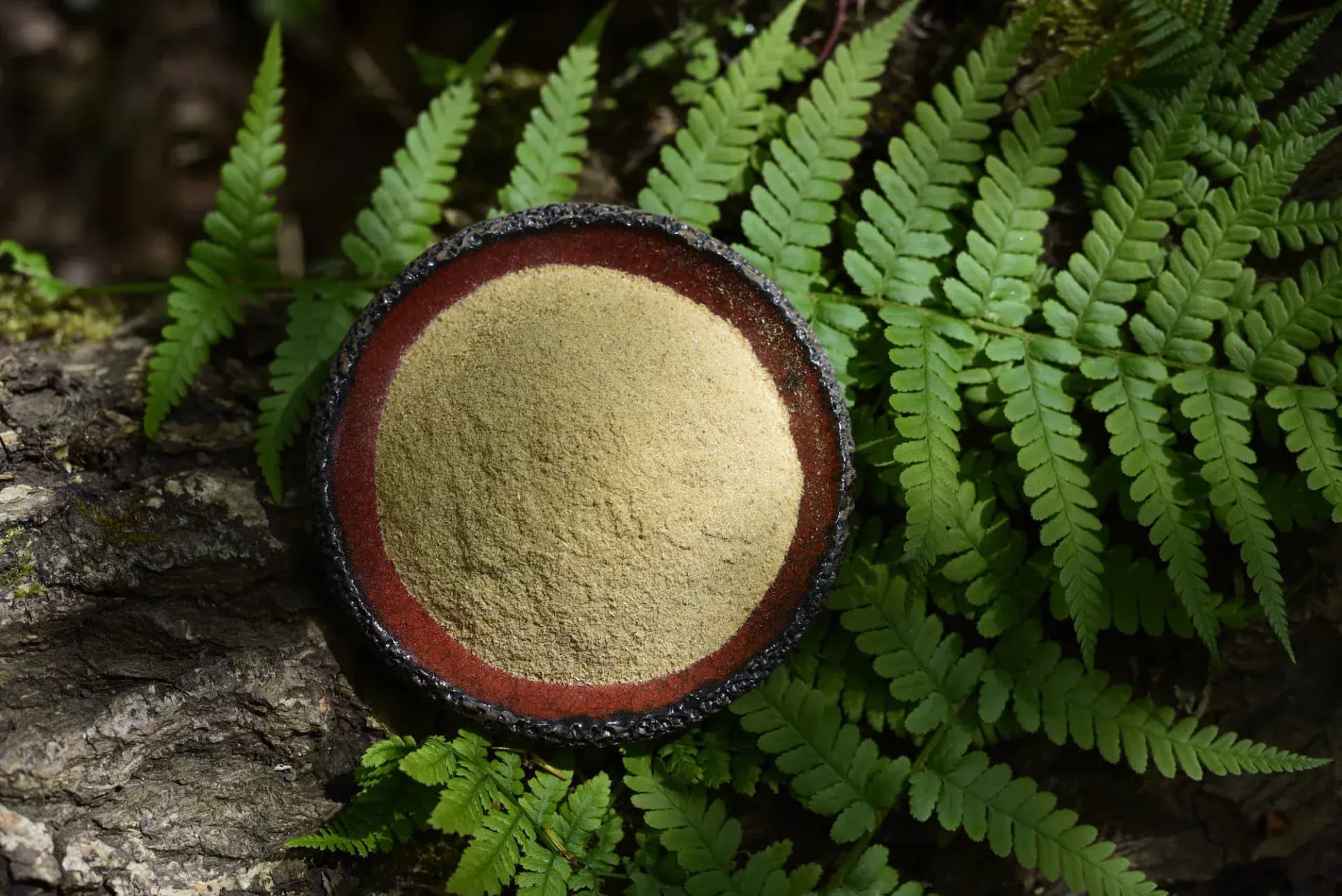
Read it through your world
The whole page is read through this lens.
✦ Shatavari · in one breath ✦
Mistress of the Yin energy — she revitalises and grounds the body, and lifts dreams and visions.
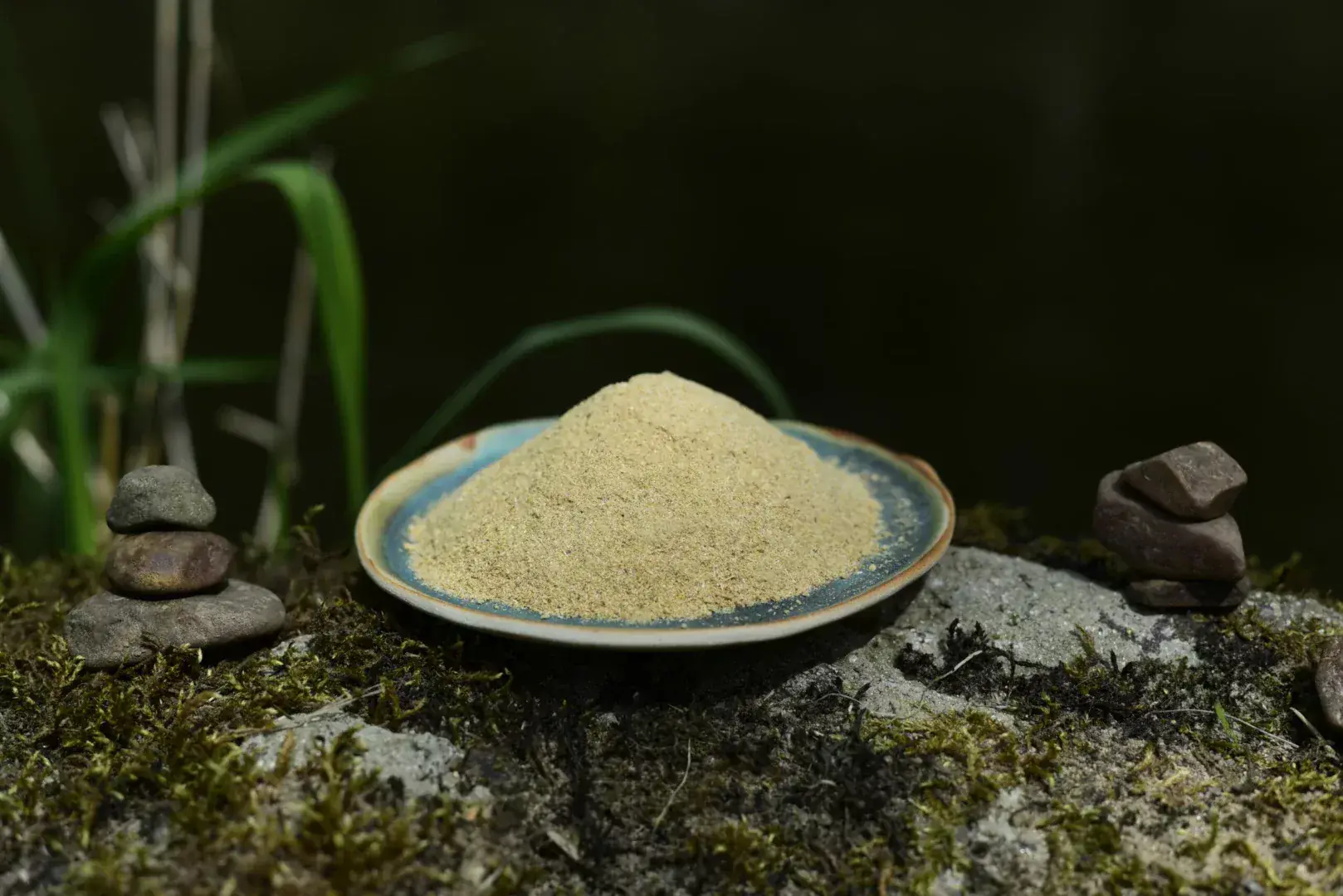
⊹ The path of the plant
⊹ Community voices
What the community murmurs.
Average · 20 reviews
Breakdown
Phenomenal. Sends you right off to sleep, beautiful dreams, wake up and spend your day in pure relaxation. Relaxes the nervous system, never been so chill in my life! Really is a Goddess in herbal form 👼🧚â€â™€ï¸
ilzd354b
Daily · 23 March 2023
Adding this to my morning cacao ritual it’s wonderful
Irene
Daily · 27 September 2023
I truly LOVE this shop so truly. The quality of the plants and medicine sold in the shop is so pure and authentic and so rare to find. There is so many opportunities for me to order bulk herbs from lots of other places, even though it cost me just a tiny bit more money, I would much rather order from this shop that has much better quality and potency than most other shops
Joslyn
Daily · 12 February 2023
Awesome stuff it really has a good synergistic effect with some of my other herbs!
Reviewed by Inactive
Daily · 21 October 2019
Ask the Forest about Shatavari
408 books digested, 97,512 indexed passages. She answers on lineages, synergies, cautions, ritual variations.
⊹ FREQUENT QUESTIONS ⊹
We answer.
What is shatavari?
Shatavari is the root of Asparagus racemosus, a thorny liana of India of the asparagus family. In Ayurveda, she is called the queen of plants — the feminine rasayana (regenerator) of reference, used for millennia to accompany women through all the seasons of their lives. Her name means "she of the hundred roots".
What is shatavari used for?
Ayurvedic tradition uses shatavari as a ground tonic for the feminine terrain — cycle, conception, postpartum, menopause — and as a nourishing adaptogen that restores what exhaustion has taken. She is a plant of long time, who reveals herself over weeks.
How do I use shatavari powder?
The classic way — a teaspoon (about 3 to 5 g) of powder in a warm drink (plant milk or simmering water around 80°C), with a pinch of cardamom and a little honey. In the morning or evening. Indian tradition marries her with warm milk, whose fat better carries her saponins. As regular cure over several weeks.
Is shatavari good for menopause?
Ayurvedic tradition has accompanied perimenopause and menopause with shatavari for millennia, for her receptive and cooling quality suited to dry transitions. Preliminary clinical studies explore this use. Shatavari is not a medicine — in case of important symptoms or hormonal treatment, ask a healthcare professional's advice.
Can I take shatavari during breastfeeding?
Shatavari is one of the best-known traditional galactagogues of Ayurveda — the famous Shatavari Kalpa of the forty postpartum days testifies. Modern research is looking into this use. During pregnancy as during breastfeeding, never start without the accompaniment of a qualified practitioner.
What are the contraindications of shatavari?
Avoid shatavari in case of known asparagus allergy (same botanical family). In presence of an estrogen-sensitive condition (breast cancer, fibroids, endometriosis), kidney failure, pregnancy or hormonal treatment, ask for medical advice before use — shatavari has a soft phytoestrogenic activity and a slight diuretic effect.
What does the name shatavari mean?
Sanskrit shat + avar reads "she of the hundred roots" — and indeed, a mature plant carries a bundle of white tuberous roots that can number a hundred. But vari also reads "husbands", hence the reading "she who has a hundred husbands", and the vaidya tradition adds a third, "healer of a hundred diseases". Three readings that coexist over millennia.
Is shatavari reserved for women?
Shatavari is mostly celebrated as the women's plant, but Ayurvedic tradition also recognises her for men — she carries the Yin quality, receptive and nourishing, useful to anyone crossing dryness, exhaustion or excess internal heat. Paired with Ashwagandha (the "King"), she forms the Queen-King duo of the Indian pharmacopoeia.
Does shatavari make you dream?
No dream tradition is documented for shatavari herself. Her name travels among the dream herbs because of her Chinese cousin, tian men dong, called the "flying herb" by Taoists (Teeguarden 1984). Our dreamers describe her as gentle and soothing, with beautiful dreams.
What do people who tried shatavari say?
Of 20 reviews published on INFUSE, one speaks of her nights: 'Sends you right off to sleep, beautiful dreams, wake up and spend your day in pure relaxation.'
⊹ Chapter · Questions ⊹
Ask, answer, share.
One question, one answer — sometimes several voices. The community answers first; INFUSE steps in when it should.
Nobody has opened a thread yet about this plant. You can be the one — a real question, a use, a doubt, a detail.
Anonymous if you prefer.
In depthbotany · phytochemistry · history
For those who want to go below the page: botany, chemistry, then four voices, each one named. ◆ what the tradition left in writing, ◇ what research has measured, ● what our dreamers tell us, ☾ what the House says.
Botany
Asparagus racemosus Willd. is a thorny climbing plant of the Asparagaceae, the family of the garden asparagus, native to India, Sri Lanka, the Himalayas and tropical Asia, and to parts of Africa. She grows in tropical and subtropical climates, at forest edges, on rocky ground and in fallow land.
She is dioecious: there are male and female plants, and Ayurvedic tradition holds the roots of the female plants to be the better medicine. The part used is the cluster of tuberous roots that hangs from the crown: a bundle of fleshy white roots that can number close to a hundred and weigh several kilos on a plant three or four years old. This bundle gives the plant her name.
Phytochemistry (descriptive)
Her core constituents are steroidal saponins — the shatavarins I to X, the plant's signature — together with asparagamine A, racemosol, racemofuran and sarsasapogenin. She also holds polysaccharides and mucilage, soft and nourishing, flavonoids (kaempferol, quercetin, rutin) and other polyphenols. Winston & Maimes (Adaptogens, p. 199) describe the steroidal glycosides as anti-inflammatory and the polysaccharides as active on immunity. Naming these compounds says nothing yet about their effect in the human body.
◆ The documented tradition
A rasayana of Ayurveda, described by Charaka and Sushruta, an ally of women through every season of their lives. No dream tradition is documented for her. Her Chinese cousin, tian men dong (Asparagus cochinchinensis), is known among Taoists as the "flying herb": taken over a long time, it is said to make you so light you could fly (Teeguarden 1984). Chinese medicine in fact calls shatavari zhang ci tian men dong.
◇ The studies
Its effect on dreaming is still to be studied.
Modern research on shatavari is still preliminary. Studies have explored her role in women's health, in lactation, and as an adaptogen, most of them in animals or in small trials. In rats, a root extract showed an anxiety-reducing effect without sedation (Garabadu & Krishnamurthy 2014, Cellular and Molecular Neurobiology). These are leads, with no guarantee of effect; shatavari is not a medicine.
● Our dreamers
Of 20 reviews published on INFUSE, one speaks of her nights (read one by one in September 2026):
"Sends you right off to sleep, beautiful dreams, wake up and spend your day in pure relaxation." — a customer
☾ The House
A true elixir of Youth and Wisdom, Shatavari is a Queen of the vegetal realm, Master of the Yin Energy. Shatavari revitalises and grounds the body, softens and deepens the emotions, calms and opens the mind, and brings the spirit into alignment.
Shatavari and dreams: what we can say
We tell it as it is. We have found no documented dream tradition for shatavari, in the classical Ayurvedic texts or in the academic literature. Her name travels in lists of "dream herbs" because of a confusion: the "Flying Herb" of Taoist and Tibetan monks, found in popular books on Chinese tonics, is *Asparagus cochinchinensis* (tian men dong), the Chinese asparagus — a different species, whose story was later passed on to shatavari by websites.
Why keep her among our dream plants, then? Because of what she is in Ayurveda: a rasayana that nourishes, softens and calms. A body that is fed and a mind that is quiet make a gentler bed for the night.
Lineage and history
In Ayurveda, the Charaka Samhita and the Sushruta Samhita place shatavari among the *rasayana*, the plants of longevity and renewal, and the women's pharmacopoeia made her its centrepiece, used at every threshold of a woman's life: puberty, conception, pregnancy, after birth, menopause. Ayurveda gave her dedicated formulas: Shatavari Kalpa (granules with milk, ghee and cardamom), Shatavari Gulam (a tonic paste), Phala Ghrita and Shatavari Ghrita (medicated ghees). Milk always returns as her vehicle: its richness carries the saponins, and its sweetness matches the soft, unctuous nature of the root.
The name as a signature
The name is read three ways: shata-vari, "a hundred roots", "a hundred husbands", "a hundred cures". The bundle of roots is read as the image of a mother who reaches a hundred fingers into the earth to feed. And "she who has a hundred husbands" carries an old boldness: in a culture where a woman was often defined by one man, naming a plant "the one who could have a hundred" speaks of a full, radiant feminine vitality. Rätsch, in The Encyclopedia of Aphrodisiacs, recalls this use and the link between receptivity and devotion it carries.
Conservation
Her worldwide popularity has led to over-harvesting that threatens wild populations in several regions. A respectful harvest takes only part of the roots of each mature plant and leaves the crown to sprout again. Choosing responsibly cultivated shatavari is today the most respectful way for the plant and her ecosystems.
Safety notes
Shatavari is among the best tolerated Ayurvedic plants; reported side effects are rare (sometimes mild digestive discomfort at the start of a cure). Her phytoestrogenic nature calls for care with hormone-dependent conditions: ask your doctor if you have a history of breast, uterine or ovarian cancer. Avoid if you are allergic to asparagus. She has a mild diuretic effect, worth knowing in case of kidney disease. During pregnancy and breastfeeding, begin only with the guidance of a health professional. Tell your doctor if you are on hormone or fertility treatment.
Sources: Winston D. & Maimes S., Adaptogens (p. 199) · Rätsch C. & Müller-Ebeling C., The Encyclopedia of Aphrodisiacs · Garabadu D. & Krishnamurthy S. 2014, Cellular and Molecular Neurobiology · Charaka Samhita, Sushruta Samhita.
Sources for the four voices: Teeguarden R. 1984, Chinese Tonic Herbs, Japan Publications · Garabadu D. & Krishnamurthy S. 2014, Cellular and Molecular Neurobiology · Charaka Samhita, Sushruta Samhita · our customers' reviews.