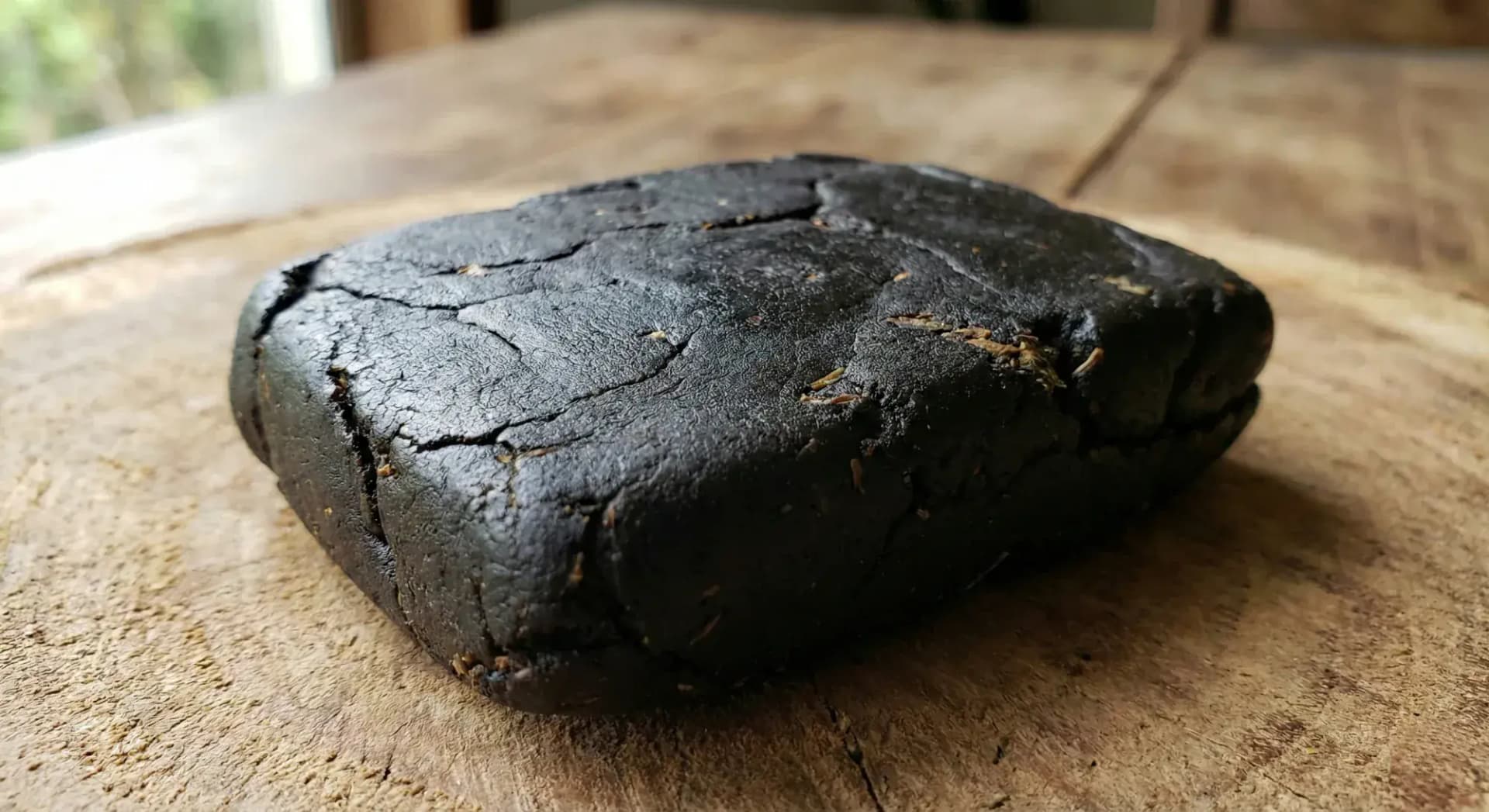
⊹ To weave around
To accompany Maconha Brava
Click a card to see why it pairs — and choose your form.
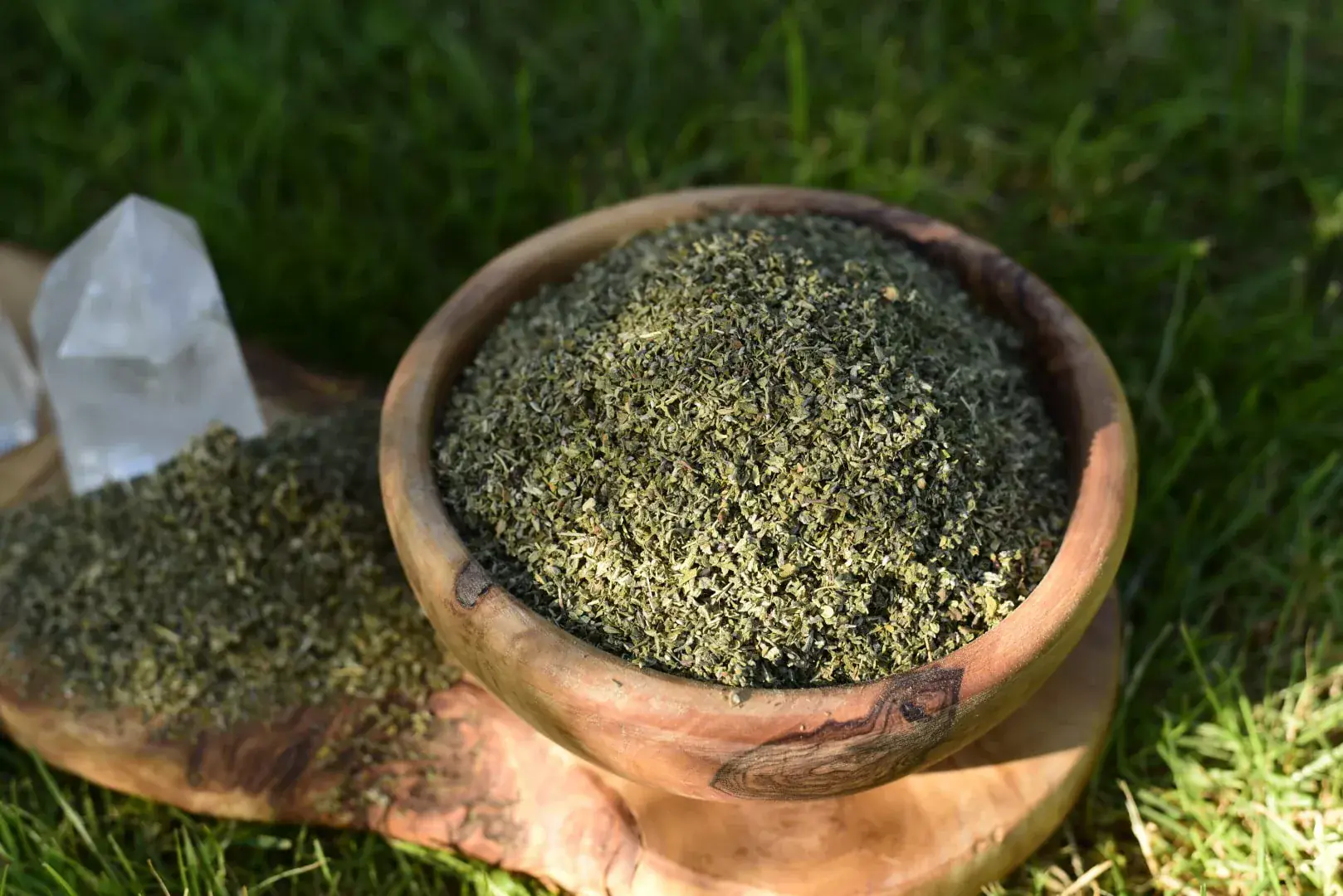
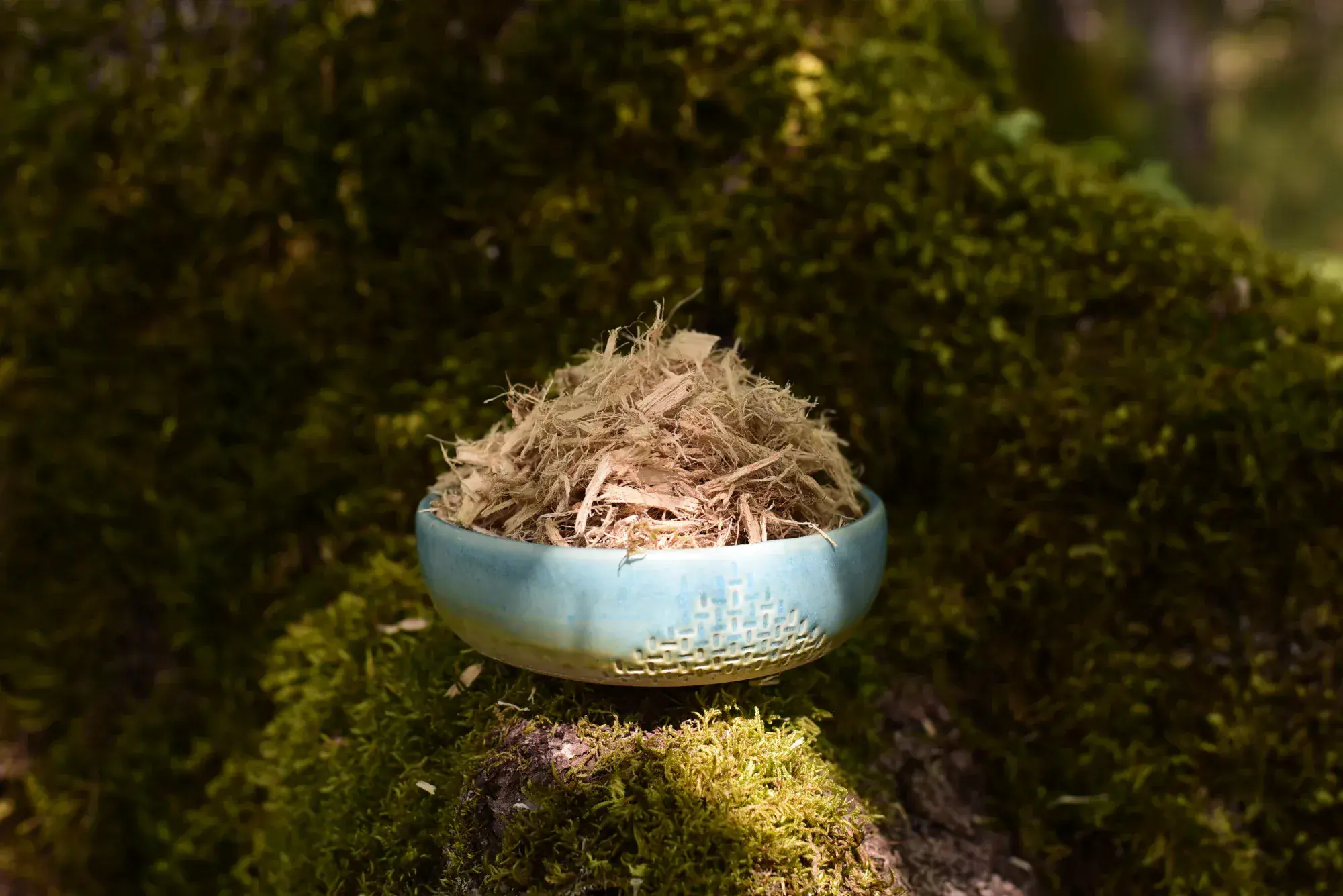

The first to talk about it?
✦ Maconha Brava · in one breath ✦
Earthy, dense and grounding — a slow return to the body's stability.
Signature INFUSEIntensity · scored out of 10
| embodiment | 10/10 | |
|---|---|---|
| circle-bitterness | 8/10 | |
| ceremonial descent | 9/10 | |
| ritual gravity | 9/10 | |
| domestic mediumship | 7/10 |
Register bitter and grounding plant, return to the body, respect and moderation · South America · raizeiros · Bahia
⊹ The path of the plant
⊹ FREQUENT QUESTIONS ⊹
We answer.
What is maconha brava?
Maconha brava (Zornia latifolia) is a perennial legume of South America, traditionally bitter and grounding. She is an evening companion who brings attention back into the body, without visions or flight.
Is maconha brava visionary?
No. She is described as mildly psychoactive, earthy and softly sedative, never visionary. She draws you downward, back to the feet, the breath, the weight of the body.
What are the traditionally described effects of Zornia latifolia?
South American folk traditions describe her as earthy, dense and grounding, acting slowly. She is used to slow down, set down the mind and return to physical presence at the end of the day. The effect is subtle and varies from person to person and batch to batch.
How do I prepare maconha brava as a tea?
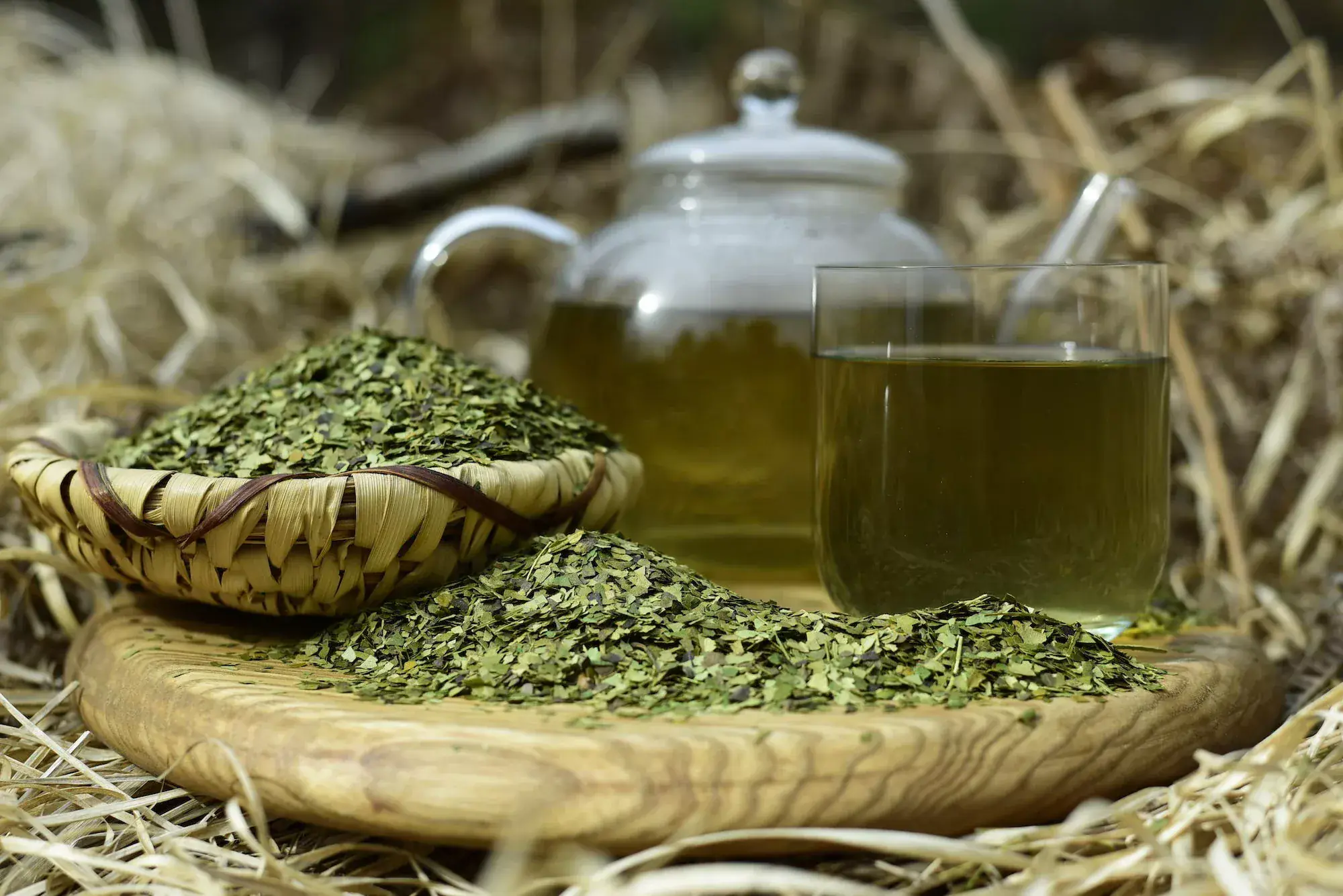
Place about a teaspoon of whole leaves in a cup of simmering water (around 80°C), leave to infuse for 5 to 10 minutes, then strain. Brazilian tradition also prepares a longer decoction. Take in the evening, always starting with a small quantity.
When should you take maconha brava?
In the evening. INFUSE ranks her among the gentle evening allies, to slow down, set down the mind and return to the body. Her effect stays earthy and discreet, without visions.
Can maconha brava be smoked?
Traditionally yes, most often sprinkled (10 to 20%) on a mild base like mullein or damiana. When she is smoked on her own, the smoke is reported to be harsh and the effect more subtle than when taken as an infusion. Use is occasional, never daily.
All questions
Does maconha brava have precautions?
Avoid during pregnancy, while breastfeeding, and before driving (mild sedative effect). Caution in combination with other sedatives. Long-term safety is poorly documented; occasional use is preferred. Ask a healthcare professional for advice if you are receiving treatment or have a health condition.
Why is Zornia latifolia's botanical identity an issue?
A 2018 study showed that many preparations sold online as "Zornia latifolia" actually contain Stylosanthes guianensis, another much more common forage legume that is pharmacologically different. Verifying the plant's botanical identity is therefore essential in this market.
What does "orphan plant" mean for maconha brava?
Researchers have recently called Zornia latifolia an orphan medicinal plant — very little studied relative to her widespread traditional use. Her pharmacology, notably the rare flavone syzalterin, is only beginning to be explored.
⊹ Chapter · Questions ⊹
Ask, answer, share.
One question, one answer — sometimes several voices. The community answers first; INFUSE steps in when it should.
Nobody has opened a thread yet about this plant. You can be the one — a real question, a use, a doubt, a detail.
In depthbotany · phytochemistry · historyRead
Botany
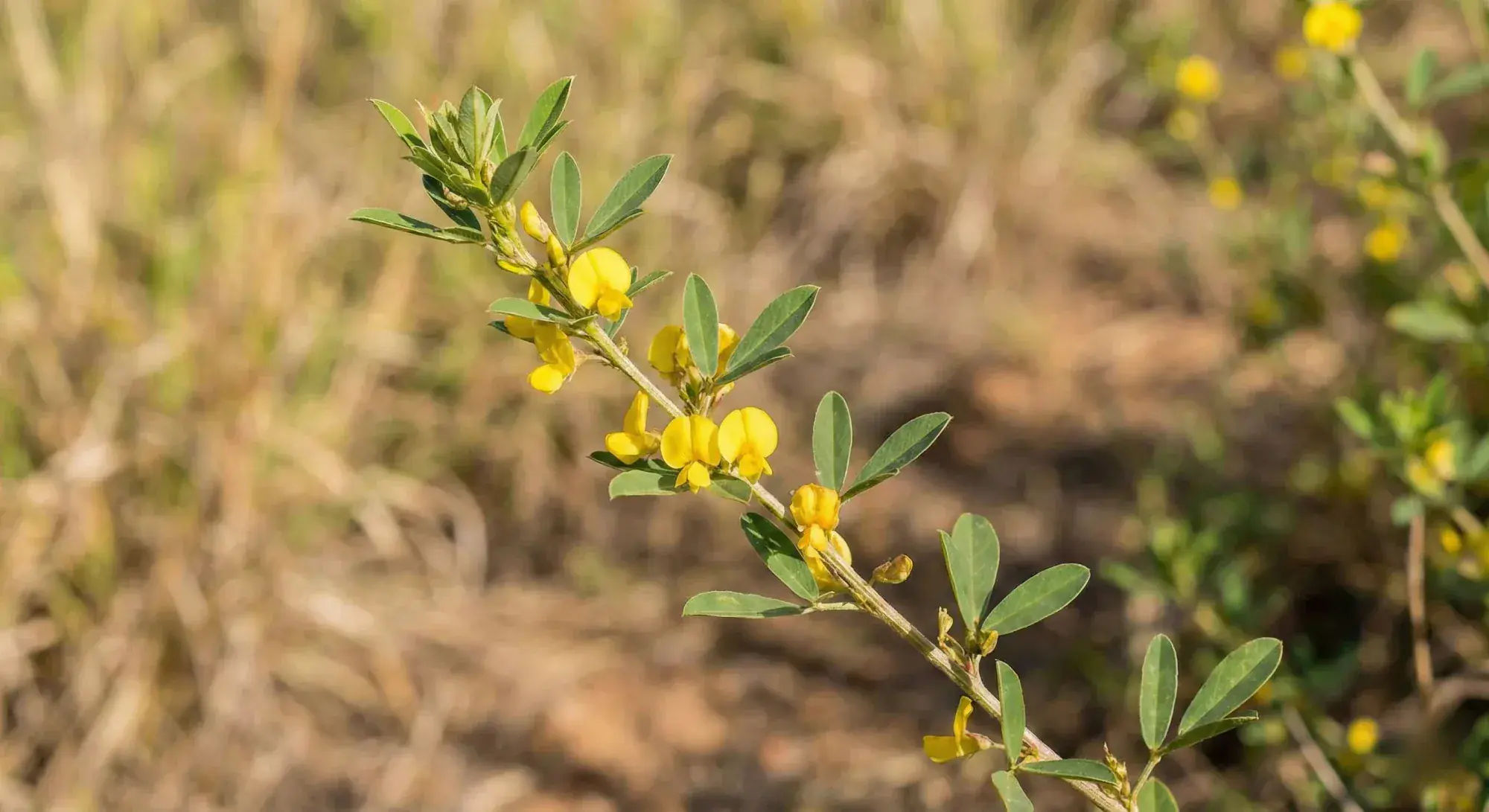
Zornia latifolia Sm. is a creeping perennial herb of the Fabaceae family (legumes), tribe Dalbergieae. It is recognised by its leaves, often with two broad leaflets (hence the epithet latifolia, "broad-leaved"), and its yellow butterfly-shaped flowers packed into bracted spikes. Native to a vast South American range, it colonises grasslands, open savannahs, roadsides and pastures: disturbed, sunny ground. Like many legumes, it fixes atmospheric nitrogen through its root nodules: it enriches the soil it occupies, which is why it is deliberately sown as a cover crop in some places.
The name as signature
The name maconha brava probably dates from the late colonial period in Brazil. The name stayed; the origin was lost. The genus name Zornia honours the German botanist and apothecary Johann Carl Zorn (1739-1799); the epithet latifolia simply describes the leaf. For the peoples who knew it before the Portuguese word, it was a useful legume: fodder, medicine, sometimes smoked.
Phytochemistry (descriptive)
Analysis of the aerial parts mostly reveals flavonoids: di-glycosides derived from luteolin, apigenin and genistein, the last two in similar proportions (about 1:1). The most singular signature is syzalterin, a flavone rare in nature, almost specific to this species. Tannins and saponins are present in small amounts. This composition remains only partly characterised: chemically, the plant is still largely unexplored.
What the studies report
Research is recent and preliminary. A 2020 in vitro study, on multi-electrode arrays of cultured rat cortical neurons, reports that lipophilic fractions of Zornia latifolia significantly reduce the mean firing rate and burst activity of the neurons. This is the first mechanistic clue supporting its traditional reputation. Notably, apigenin and genistein alone do not produce this effect; it seems to be carried by syzalterin (or a syzalterin/genistein mix). The exact mode of action remains to be worked out: a GABAergic pathway (apigenin modulates the GABA-A receptor) and anti-inflammatory activity are mentioned. None of this establishes a clinical effect in humans: these are laboratory observations.
An orphan plant
Researchers have recently called Zornia latifolia an orphan medicinal plant: very little studied relative to its widespread traditional use and promising bioactive scaffolds. In the history of pharmacopoeia, such neglected plants sometimes reveal themselves late (ashwagandha was still one in the 1990s). Syzalterin in particular is cited as a molecule "to be studied".
Lineage and history
The best-traced thread is Brazilian and Afro-Brazilian: used by raizeiros as a calming and sleep-inducing plant, in convalescence tonics in Bahia and Mato Grosso, as a hedge plant with a double use (fodder and home medicine), and as a smoking herb. In syncretic cults (Umbanda, Candomblé), it goes into ritual cigarettes offered to the caboclos: a use of incarnation, far from flight. In Suriname and the Guianas, under the name koemataballi, it is mostly used in everyday herbal medicine. The thinness of ethnographic sources on pre-colonial Tupi-Guarani use calls for care: what we inherit are fragments.
In the INFUSE Forest, the plant is thinly represented. Christian Rätsch, in The Encyclopedia of Psychoactive Plants, describes it among the South American smoking herbs and already pointed out the taxonomic confusion with other legumes. Schultes & Hofmann, in Plants of the Gods, mention it among the minor psychoactive plants, noting the low volume of academic research. Dale Pendell, in Pharmako/Gnosis, evokes it among the "gentle Phantastica", where phenomenological experience counts for more than chemistry.
The question of botanical identity
This is probably the most important point for anyone interested in this plant. A 2018 study (Zornia latifolia: a smart drug being adulterated by Stylosanthes guianensis) showed that a large share of preparations sold online as Zornia latifolia actually contain Stylosanthes guianensis, another forage legume, far more common and cheaper, but pharmacologically different. It is among the clearest documented examples of adulteration on the "smart drugs" market. Reliable identification takes HPLC or DNA barcoding. The practical consequence is simple: with this plant, the botanical identity of what you buy matters.
Safety notes
Mild sedative effect: avoid before driving or using machinery, and take care in combination with other sedatives. Avoid during pregnancy and breastfeeding, for lack of data. Long-term safety is poorly documented: occasional use is preferable to prolonged daily intake. The lack of standardisation means the intensity varies from batch to batch.