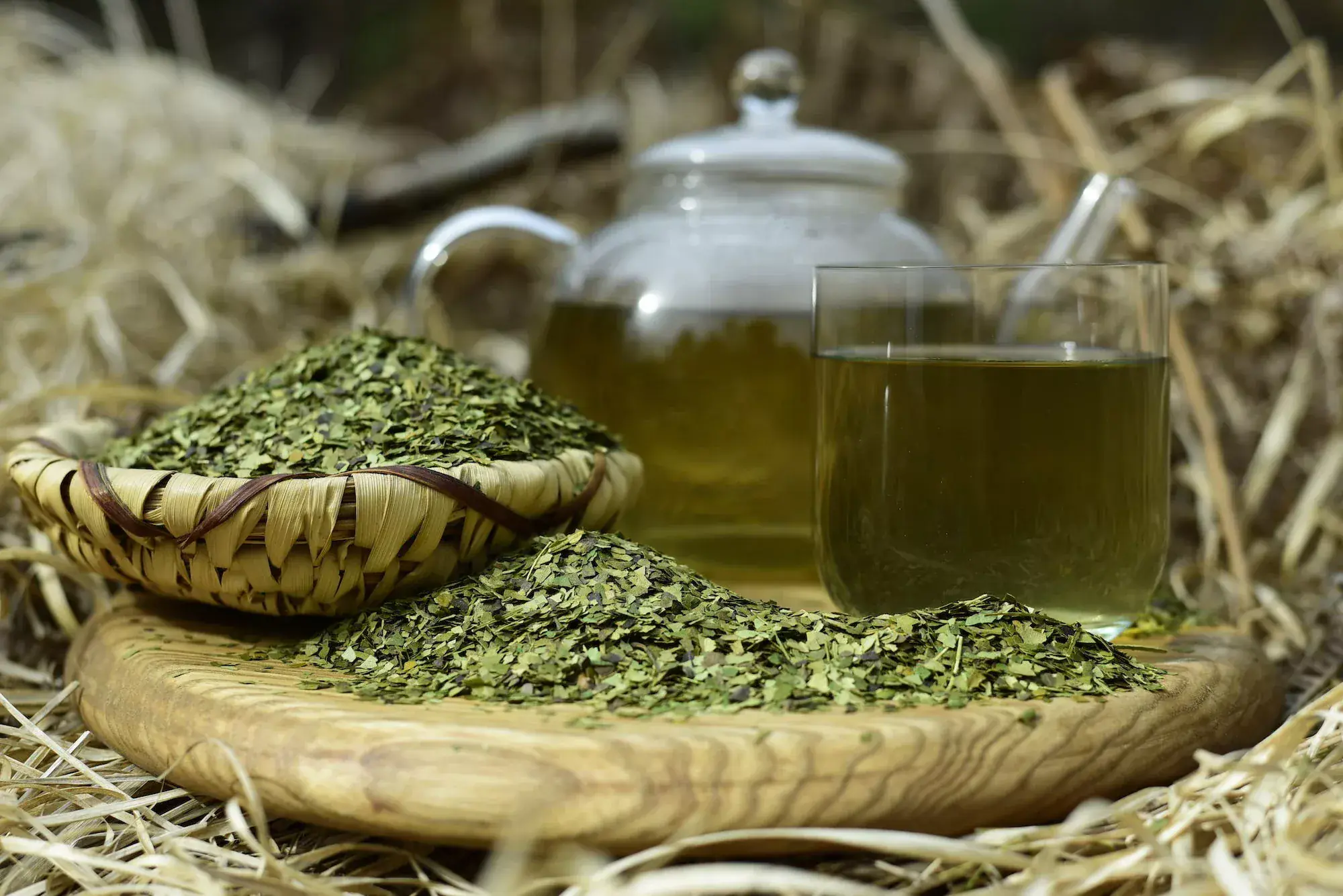
Read it through your world
The whole page is read through this lens.
✦ Guayusa · in one breath ✦
A calm energy that holds twelve hours, no crash no crack — the fire lit before the day, the heart open.
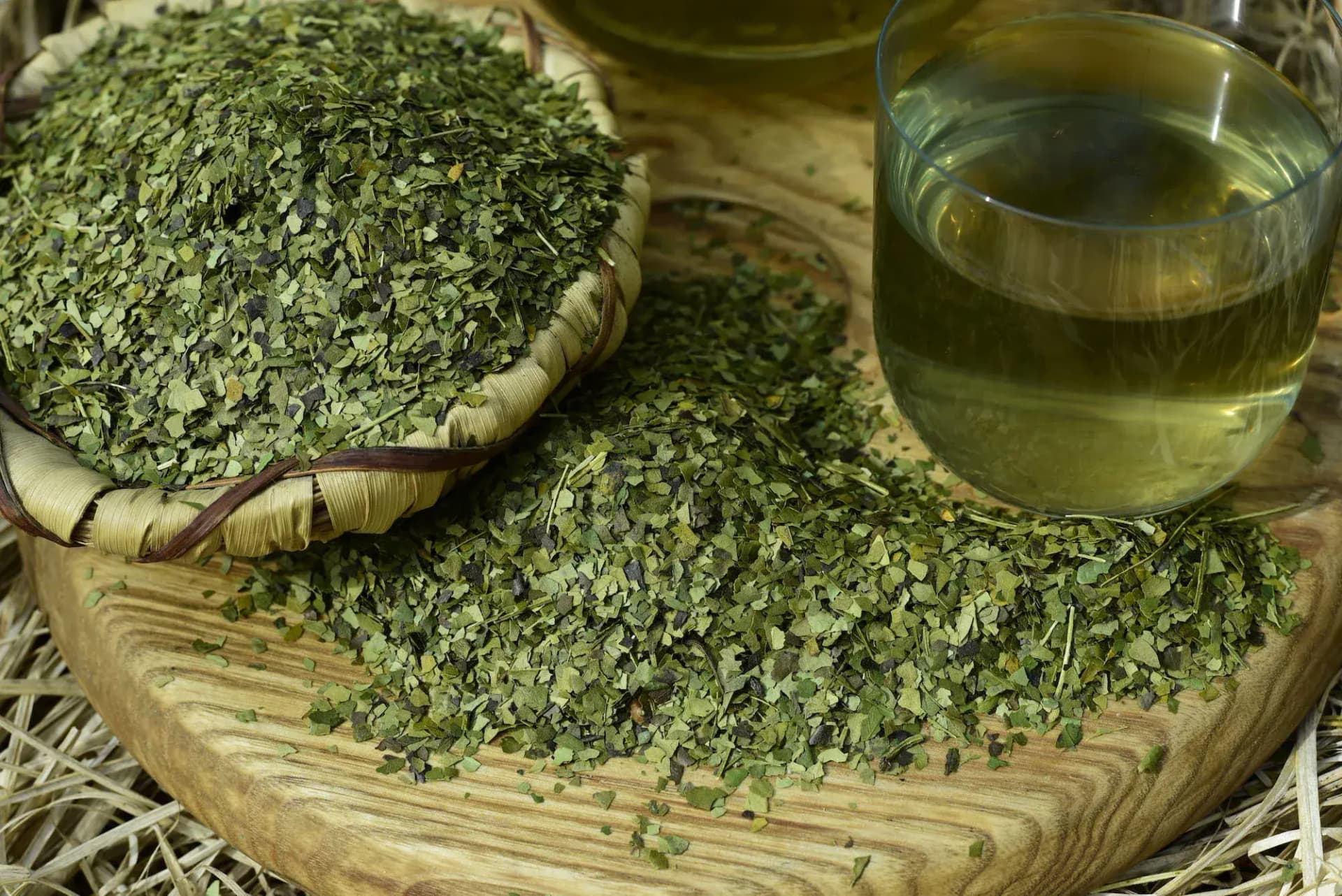
⊹ The path of the plant
⊹ Community voices
What the community murmurs.
Average · 91 reviews
Breakdown
My new coffee replacement… I love this tea, an amazing boost to start my day, a little racy for the first few minutes but that’s just me in general, like a sketch from the Benny Hill Show and then you can feel your brain clicking into place. Focus is great; I’m getting so much more done in my crammed day , motivation is back as it should be. I highly recommend if you need a decent morning boost without the headaches and speedy feeling I used to get with guarna!!
Dorit Phipps
Daily · 2 February 2023
I had never tasted Guayusa but it already attracted me strangely and I can tell you that I have never consumed so much and like to consume one of your herbs so much from the first day of receipt, especially without knowing. This plant is absolutely extraordinary and its taste is highly pleasant by remaining subtle. I was looking for something relaxing and energizing at the same time and it does so much more! It feeds me with immense positivity, joy. It is the only energizing plant or one of the only ones that does not cause me either any heart palpiations (while I have a breath in the heart and it beats very fast) or stress, unlike kanna it succeeds me really well. Thank you again and sorry for the last time .c was not my day. You are super.ne change anything!
Nébuleuse
Daily · 27 November 2021
Immense power is contained in these leaves. Real euphoric, naturally and concentration is through the roof with this one and slight minty aftertaste ahhh much desirable.
Patrick
Daily · 8 March 2021
Wonderful helpful plant~ so happy to have found it because you all are putting it out there! The resin and the leaves of the plant are equally good, but resin is great when one is not having the time to make tea. Thank you!
Melanie Lane
Daily · verified purchase · 28 September 2024
Received and used to open up my dreams and meditation time.
Alistair
Daily · 25 September 2024
Amazing as always! Great customer service! great product! My favourite guayusa I have found internationally!
Alexandra
Daily · 2 July 2024
It is a really good tea, it produces effects similar to coffee, but softer and of better quality, quite a discovery.
Pepito
Daily · 27 October 2023
clean fresh and so effective for my dream recall,shall definitely purchase again.
BENGA AYOOLA
Daily · 27 June 2023
So happy I got this cause I have trouble with caffeine making me stressed out and this is feels invigorating but relaxing at the same time. Definitely worth every penny.
Samantha
Daily · 27 October 2022
I can only warmly recommend the Guayusa leaves! The tea exceeded my expectations, it helps me to stay focused all day and have more energy. The package arrived on time and even a small product sample was enclosed.
Anika
Daily · 28 June 2022
Top quality product: guayusa provides a supportive, slow-release energy for the day. The seller is clearly very knowledgable and sent a beautiful package including a couple of samples: thank you very much!
beechwood
Daily · 26 December 2020
Just received this, going to brew some up tomorrow.
pdorge
Daily · 13 August 2019
Ask the Forest about Guayusa
408 books digested, 97,512 indexed passages. She answers on lineages, synergies, cautions, ritual variations.
⊹ FREQUENT QUESTIONS ⊹
We answer.
What is guayusa?
Guayusa (Ilex guayusa) is a holly of the upper Amazon (Ecuador, northern Peru, southern Colombia), a cousin of yerba mate, whose leaves contain caffeine. Among the Kichwa of Ecuador, it is drunk together before dawn while the night's dreams are told: this is the wayusa upina.
How much caffeine does guayusa contain?
The leaves typically contain 1.7 to 1.8% caffeine, sometimes 3 to 4%, with a record 7.6% recorded on a wild plant. A cup brings a clear awakening but spread over several hours. She is a powerful caffeinated plant, to reserve for the morning and the daytime.
What's the difference between guayusa and coffee?
Coffee arrives like a discharge and leaves like a crash. Guayusa carries her caffeine differently — a wide and long awakening, without the aggressive peak or the rebound. Her note is gentle, vegetal, slightly bitter, less tannic than tea. Many adopt her as a morning coffee alternative.
How do I prepare guayusa?
Traditionally, the leaves are boiled for a long time over the fire, in a gourd or as a 20-minute decoction. For every day, two teaspoons steeped five to ten minutes in simmering water. The resin paste dissolves from a knife tip in a hot or warm drink.
Does guayusa help you remember dreams?
That is its rite: among the Kichwa, the wayusa upina gathers the family before dawn to drink guayusa and interpret the night's dreams. Among the Jivaro, it gives "little dreams" in which you see whether the hunt will go well (Rätsch 2005). Drunk on waking, notebook open, it helps keep the thread between night and day.
Can guayusa be drunk in the evening?
No. Guayusa awakens and keeps awake — she is a plant of morning and daytime, never an evening herbal tea. Tradition takes her at dawn, and modern use places her before mid-afternoon to avoid disturbing sleep.
Does guayusa have contraindications?
Like any source of caffeine, she should be approached with caution in case of caffeine sensitivity, anxiety, hypertension or heart disorders, and strongly limited or avoided during pregnancy and breastfeeding. She is not recommended for children. When in doubt, ask a healthcare professional's advice.
Where does INFUSE's guayusa come from?
INFUSE sources guayusa in Ecuador, her original land.
What are the benefits of guayusa?
A calm, long energy carried by caffeine, with a little theobromine. Kichwa tradition drinks it to rise before daylight, talk about dreams and prepare the hunt. The Kichwa sum up what it gives them in one word: Runa, fully alive.
Does guayusa have side effects?
Those of a caffeinated drink: too late in the day, it can delay sleep; in excess, jitters and palpitations. Pregnancy, breastfeeding, children, caffeine sensitivity, heart conditions: avoid it or ask your doctor.
Does guayusa help with lucid dreaming?
It is drunk in the morning, on waking: its role is to hold and tell the night, and a well-remembered dream is the first step towards lucidity. No study has measured an effect of guayusa on lucid dreaming.
What does Runa mean?
Runa means "person, human being" in Kichwa: it is the name the Kichwa give themselves. For the House, it is what guayusa gives: feeling fully alive.
What do people who tried guayusa say?
Of 91 reviews published on INFUSE, 4 tell of a night: 2 more vivid dreams, 1 better recall, 1 symbolic animals. Samonyai: 'I experience symbolic animals and awareness in dreams'.
⊹ Chapter · Questions ⊹
Ask, answer, share.
One question, one answer — sometimes several voices. The community answers first; INFUSE steps in when it should.
Nobody has opened a thread yet about this plant. You can be the one — a real question, a use, a doubt, a detail.
Anonymous if you prefer.
In depthbotany · phytochemistry · history
For those who want to go below the page: botany, chemistry, then four voices, each one named. ◆ what the tradition left in writing, ◇ what research has measured, ● what our dreamers tell us, ☾ what the House says.
Botany: a holly
Guayusa (Ilex guayusa Loes., synonym Ilex utilis) belongs to the genus Ilex, the hollies, of the Aquifoliaceae. Botanically she has nothing to do with tea (Camellia sinensis) or coffee (Coffea). Her close cousins are yerba mate (Ilex paraguariensis) of South America and yaupon (Ilex vomitoria), drunk by the peoples of the North American south-east as a ceremonial "black drink": three caffeinated hollies of the Americas, each tied to shared rituals of waking.
She is an evergreen tree that can reach some fifteen metres, with oval, alternate leaves. She grows in the humid forests of the upper Amazon — mainly Ecuador, and the edges of north-eastern Peru and south-western Colombia — and rarely flowers in cultivation. Most known stands are tended by people: guayusa has travelled with human hands for so long that she can hardly be separated from the cultures that care for her.
Phytochemistry (descriptive)
Guayusa is above all a plant of methylxanthines. According to the figures reported by Rätsch, her leaves typically hold 1.7 to 1.8 % caffeine, sometimes 3 to 4 %; the highest value measured, about 7.6 % of dry matter, is a maximum and not a typical figure (Negrin et al. 2019, via Noriega et al. 2025). Theobromine, the alkaloid of cacao, is present in small amounts (about 0.02 to 0.12 % in decoctions), and theophylline only in traces. The leaves are also rich in polyphenols: catechins, chlorogenic acids, flavonoids.
◆ The documented tradition
Among the Kichwa of Ecuador, the wayusa upina begins before dawn, once around three or four in the morning: the guayusa is heated over the fire, drunk together, the elders talk, and the night's dreams are interpreted to decide the day, above all the hunt. A 2026 study notes that dream interpretation has become rare there (Espinosa Andrade & Vásquez-Castillo 2026). Among the Runa of Ávila, people wake in the night for a gourd of guayusa, and dreams spill over into waking life (Kohn 2013). Among the Jivaro, guayusa gives "little dreams" in which you see whether the hunt will go well (Rätsch 2005, p. 289, after Karsten 1935). Prepared leaves were found in a healer's tomb at Niño Korin, Bolivia, radiocarbon-dated to the year 355 (Rätsch 2005, p. 287).
◇ The studies
Guayusa is a caffeinated drink: up to 75.7 mg of caffeine per gram of dried leaf in the richest sample measured (Negrin et al. 2019, cited by Noriega et al. 2025), with a little theobromine. No study has measured its effect on dreams.
Research on guayusa has looked mostly at her antioxidant profile, measured in vitro, and at her safety: in toxicology tests the oral LD50 exceeds 5,000 mg/kg (Kapp 2016). Many drinkers describe a long, even wakefulness. These observations concern markers and perceptions and prove no medical effect; her first action is that of any caffeinated drink.
● Our dreamers
Of 91 reviews published on INFUSE, 4 tell of a night (read one by one in September 2026): 2 speak of more vivid dreams, one of better recall, one of symbolic animals.
"I experience symbolic animals and awareness in dreams, guayusa gives powerful energy I recommend only to take in moring." — Samonyai
☾ The House
Powered by the Jaguar Spirit, its Feline, Wild Jungle essence is infused with Playfulness, Sensuality, and Audacity! The Kichwa people describe the effects of Guayusa as making them feel "Runa", translating as "Fully Alive". And it carries its lucidity into your dreams: gentler sleep, memorable dreams, easier mornings.
Lineage and long history
The oldest trace is archaeological. In a tomb of the Tiwanaku period at Niño Korin, in Bolivia, carefully prepared guayusa leaves lay among the equipment of a healer. Richard Evans Schultes identified them — "Ilex guayusa from 500 A.D. to the present" (Wassén 1972). The plant does not grow there: her presence in the tomb speaks of a sacred trade over hundreds of kilometres, between the Amazon and the Andes.
In writing, the Jesuit Juan Lorenzo Lucero reported in 1683 the daily drinking of guayusa among the peoples then called Jivaros. The Jesuits went on to sell it in Quito as a remedy for venereal disease (Dueñas et al. 2016). In 1857, the British botanist Richard Spruce described cultivated guayusa near Baños, in Ecuador.
The wayusa upina: talking about dreams before dawn
Among the Amazonian Kichwa of Ecuador and northern Peru, guayusa is wayusa, and the central rite is the *wayusa upina*, "drinking the guayusa". People rise long before dawn — in the old days between three and four in the morning — prepare guayusa over the fire, and drink it while the elders speak. The dreams of the night are shared and interpreted, and the day is planned from them, above all the hunt (Espinosa Andrade & Vásquez-Castillo 2026, PLoS One). Hunters say guayusa helps them dream, so that by reading those dreams they can foresee the hunt (Bennett & Alarcón 2015).
The anthropologist Eduardo Kohn, who lived with the Runa of Ávila, describes people waking in the night for a gourd of guayusa, and a fine grammar of dream reading: the dreams of dogs are read literally, those of humans as metaphors (How Forests Think, 2013).
The same 2026 study adds an honest nuance: dream interpretation over guayusa has become rare in daily life; the rite lives on at community gatherings. Guayusa's link with dreams is therefore social before it is pharmacological. She is a stimulant; she wakes you so you can speak of the night. Some of our dreamers also write to us about more vivid, more memorable dreams.
Among the Achuar, guayusa — wayus — is drunk copiously before dawn, followed by a deliberate purge, a learned bodily practice of the rite (Noriega et al. 2025). The English name "night watchman" comes from this long vigilance. And guayusa carries a legend we keep as a legend: in Ecuador, it is said that when you offer guayusa to someone you love, they will always come back, however far the journey takes them.
In recent years, guayusa has reached the world partly through Kichwa cooperatives and chakra agroforestry, small forest gardens where she grows beside cacao and bananas. She is a plant of alliance between a people and a tree.
Safety notes
Guayusa is a caffeinated plant: her first effect is to wake you and keep you awake, so she belongs to the morning and the day. If you are sensitive to caffeine, anxious, or have high blood pressure or a heart condition, approach her as you would a strong coffee. Limit her strongly, or avoid her, during pregnancy and breastfeeding; she is not recommended for children. The Achuar describe the signs of too strong a dose — severe headache, bloodshot eyes, unsettling sensations — and deliberately avoid the wild plants richest in caffeine: reasonable amounts are the rule. If in doubt, a health professional comes before the plant.
Sources: Wassén S.H. 1972 (Niño Korin) · Espinosa Andrade & Vásquez-Castillo 2026, PLoS One · Noriega P. et al. 2025, Molecules · Dueñas J.F. et al. 2016, Economic Botany 70:85-91 · Kohn E. 2013, How Forests Think · Rätsch C., The Encyclopedia of Psychoactive Plants.*
Sources for the four voices: Espinosa Andrade & Vásquez-Castillo 2026, PLoS One (PMID 42228731) · Kohn E. 2013, How Forests Think, University of California Press · Rätsch C. 2005, The Encyclopedia of Psychoactive Plants, Park Street Press · Noriega P. et al. 2025, Molecules (PMID 40649351) · our customers' reviews.